As more medical professionals look beyond another social media feed or another full group of medical specialists to find something more, the medical communities are becoming more vital than ever. Physicians are seeking trusted environments in which to network, learn, collaborate, and grow with other healthcare professionals who have an understanding of their world, as medicine becomes more complex, competitive, and connected.
The old way of connecting from one medical specialist to another is no longer sufficient for many medical specialists. Conferences are beneficial but they don't occur often. Hospital meetings can be helpful, however, they tend to be limited to local colleagues. While reach exists with large social media platforms, they can be noisy, inconsistent, and not necessarily geared toward serious, clinical, or professional discussion.
This is where niche medical communities are coming into existence. These communities, organizations, and professional networks provide a more targeted space for experts to connect with other professionals, share experiences, find continuing education, get updates on industry news and trends, and create opportunities.
Rising exclusive medical communities is not about status. It is about signal. Experts desire to have fewer irrelevant conversations and more worthwhile connection. They seek opportunities to connect with people, information and conversations that truly assist them in their clinical and professional development.
Exclusive Medical Communities are spaces for Medical Professionals, Medical Specialists, Clinicians, Executives, Research Scientists, Educators and Healthcare Innovators. These communities may be verified, have membership requirements, focus on a specific type of content, or have professional relevance, unlike the open social media platforms.
They can be online, specialty-specific, invitation-only, academic, alumni-only, digital health, or physician-led professional associations.
The main distinction lies in the focus.
A cardiologist does not require a general health care feed. A dermatologist might be interested in hearing from your fellow dermatologists regarding practice development, clinical news, new aesthetic trends, research and communication with patients. The hospitalist might consider talking with them about workflow, AI tools, documentation, transitions of care, and inpatient quality measures.
The noise is reduced and the professional environment more relevant in exclusive medical communities.
Networking has transformed and medical specialists are getting into exclusive medical communities by the day.
Networking used to be about going to conferences, being members of local medical societies, or using hospital connections. These channels are still very important but no longer sufficient. Now, specialists must have wider and more varied networks.
Relationships with a medical network may result in referral relationships, research partnerships, speaking engagements, advisory roles, start-up partnerships, mentorship, consulting engagements and career growth. The right connection can give you access to opportunities that you would not otherwise be able to get through traditional means.
Networking is more deliberate in exclusive medical communities. Rather than finding people online by chance, specialists can come across others with comparable clinical interests, business goals, challenges or innovation priorities.
A surgeon could become involved with a medtech’s founder. The psychiatrist can work in partnership with a digital mental health firm. An oncologist may encounter researchers who are conducting clinical trials. Partners can be found by a primary care physician for a new model of care.
It's not only a social networking! It is strategic.
Medicine changes quickly. New care models, technologies, medications, devices, new guidelines continually arise. Medical specialists can't afford not to stay current. It is an essential part of the duties of the profession.
The exclusive medical communities are becoming even more valuable with their support of continuous education in a practical and accessible manner. In addition to formal lectures or annual meetings, the specialists can gain knowledge from peer discussions, case-based conversations, expert panels, webinars, clinical updates, journal clubs and real world commentary.
This is a learning experience that is different from classroom learning. It's more direct, more pragmatic, and more relevant to the everyday clinical setting.
For instance, a specialty expert might share a new guideline, but the most important part of the information is to hear from other doctors how they are using it in their own practices. What are the workflow issues? What are the patient communication problem(s)? What are the barriers to reimbursement? What are the practical restrictions?
Exclusive medical communities will be able to fill the gap between published knowledge and clinical use.
For good reason, healthcare professionals are wary of what they say online. It can be dangerous on the public platforms. Comments are subject to misinterpretation. Clinical conversations can be misunderstands. There are real privacy issues. Professional reputation matters.
That's one of the reasons that verified or curated medical communities are gaining more popularity. Experts wish there were more settings that would allow them to have more professional, more relevant, and more respectful discussions about healthcare boundaries.
This is because of the fact that a trusted medical community is the place for clinicians to explore ideas without the noise of social media. In a setting geared towards the healthcare field, they can discuss professional concerns, the trends in healthcare, practice management, burnout, technology, leadership, and education.
The best communities encourage responsible conversation, too. They promote privacy consciousness, conscientious communication and meaningful interactions instead of viral outrages and superficial interactions.
This is important to specialists. Their days are few. They have a valuable professional identity. They should have a context for their conversations.
Healthcare professionals are understanding that clinical acuity is not the only way to find employment.
Visibility matters:
When someone is able to contribute thoughtfully to a healthcare community, join in on relevant discussions, teach others, comment on industry issues, or anything else, their reputation will go beyond their own institution.
Specialists have the opportunity to build that visibility in a more targeted manner in exclusive medical communities. They don't need to go out there and try to reach a wide audience of people, but they can get their message across to the people for whom they have the greatest credibility: peers, healthcare leaders, researchers, founders, educators, investors, recruiters, and professional collaborators.
This is particularly beneficial for doctors who have a leadership background, have an interest in digital health, consulting, medical education, entrepreneurship, research or advisory.
Professional development is not just about what you know in today's health care environment. It's also about who is aware of your work.
One of the most awesome advantages of exclusive medical communities is mentorship.
New doctors require advice on fellowship, practice options, academic career, private practice, contract negotiation, board preparation and overall career planning. Mid-career professionals might seek guidance on leadership, burnout, expanding practices, entrepreneurship or administrative career paths. Senior doctors may wish to nurture, educate, counsel or remain involved with the next generation of medicine.
Within exclusive medical communities, mentorship is easier because it assures the presence of professionals at various stages in their careers.
A young specialist can benefit from a successful practice being formed by someone else. A doctor who is interested in medical leadership can reach out to a CMO. A clinician interested in health tech has the opportunity to connect with physicians who have provided guidance on startups or developed a digital health product.
This kind of mentorship is very hard to come by on a whim. Communities make it more accessible.
Healthcare is no longer isolated to one hospital, one clinic, or one specialty. Modern medical problems require collaboration across disciplines.
Exclusive medical communities help specialists connect with people outside their immediate workplace. This is especially important for physicians in smaller hospitals, independent practices, rural areas, or highly specialized fields.
A nephrologist may want to discuss population health models. A neurologist may want to connect with AI researchers. A radiologist may want to explore workflow automation. A pediatrician may want to collaborate with public health experts. A physician entrepreneur may want feedback from clinicians before launching a product.
These communities create a bridge between clinical practice, research, business, technology, and education.
The result is a more connected healthcare ecosystem.
Healthcare is no longer confined to one clinic, one hospital or one specialty. The complexity of the modern problems in medicine calls for multidisciplinary cooperation.
Specialist communities are exclusive and are used to bring together people who are not in the same work environment. This can be particularly crucial for doctors within independent medical practices, small hospitals, rural areas, or specialized fields.
A nephrologist may wish to explore population health models. Neurologists may want to reach out to AI researchers. To improve their workflow, a radiologist might consider workflow automation. Pediatrician may want to work with public health professionals. A physician entrepreneur may desire input from physicians before they start a product.
These communities are the link between clinical practice, research, business, technology and education.
This creates an integrated healthcare system.
Exclusive Communities Reduce Professional Isolation.
Even in a very busy hospital, medicine can be lonely.
Specialists are likely to have a heavy clinical load. They are required to make complex decisions, cope with high expectations of patients, struggle with administrative burden, and emotional fatigue. Many doctors feel isolated from people all day.
Specialists can alleviate that isolation by having access to other specialists who know the stresses of the job.
This is not a substitute for institutional wellness programs or practical help, but can be an important connection in the professional world. It can be validating to just read about the struggle of other doctors.
Educational benefits are not the only reason for the value of community. It is human.
The other reason for why medical experts are joining exclusive medical communities is the wave of healthcare innovations.
How medicine is practiced is changing with AI, digital health, remote monitoring, telemedicine, robotics, diagnostics, automation and new care delivery models. Experts don't want to find out about these changes after they occur. They wish to know them at an early stage.
Medical communities often isolate themselves from each other and new ideas can be disseminated from one community to the other. Physicians can review tools, share risks, discuss workflow issues, and even impact product design.
This is particularly significant because often, healthcare technology is poorly developed without the involvement of clinicians. Communities provide a platform for specialists to be part of the innovation process prior to decision.
For health-care organizations, these communities also provide a means to grasp the true clinical requirements. They provide a pathway for doctors to influence the future of health care.
A lot of doctors are considering the career direction they want to take.
Others wish to stay completely clinical. Others seek a blend of clinical practice, teaching, leadership, consulting, research, investing, entrepreneurship, policy, and/or media. These possibilities are exposed to specialists in exclusive medical communities.
Medical writing, advisory boards, startup medical writing, expert panels, speaking, telehealth, medical education and healthcare leadership are possible avenues for discovery. These opportunities usually aren't advertised on job boards, but on relationships.
Specialists are guided by communities to envision possibilities.
They also support doctors to master the language of neighbouring fields. Founders can teach a clinician about digital health. Executives can teach a specialist about administration. Researchers can reach industry contacts. A physician educator can communicate to a wider population.
Optionality is a key factor in professional growth, and communities provide an avenue for it.
Specialists are busy. They don't need yet another platform that wastes time. They require communities to value their time.
A robust exclusive medical community should facilitate a more efficient process for its members to locate the people, discussions, resources, events, and opportunities that are relevant to them and their specialty.
That's why curation is important.
No bigger medical communities will be the future of medical communities. It will be about the right people, the right discussions and the right professional values.
Instead, for specialists, the question is not, “Should I join another network?
The better question is, “Will this community allow me to learn, grow, connect and contribute in a meaningful way?”
Not all medical communities are worth it. There are platforms or groups to which specialists should seek out because there are tangible professional rewards to be found there.
A robust medical community should encompass verified healthcare experts, connected discussions about the various specialties, instructional material, networking, a user-friendly interface, expert oversight, mentorship systems, and collaboration opportunities.
It should also take clinical reality into account. There's no time for clutter in the doctor's office. They require an easy-to-use, professionally relevant, and useful community in just a few minutes.
Medical communities are not limited to being online. They turn into professional ecosystems.
The establishment of exclusive medical communities is indicative of the broader trend in healthcare. Professional spaces are desired by specialists to be places of networking, further education, mentoring, collaboration, innovation, and career growth.
They desire a connectedness with no noise. Education without friction. Without performing social media. Collaboration without geographic limits.
A complicated medical landscape will only make medical communities more pivotal. They will keep specialists up to date, establish relationships, find opportunities and influence the future of medicine.
Medical specialists know how to leverage the power of community in a way that's more than just a networking opportunity. It's a career plan.
Medical communities are now playing a vital role to the specialists who wish to expand their horizons beyond the boundaries of their institution, specialty silo, and conventional professional network. They provide opportunities for peer to peer, mentor to mentee relationships, education, collaboration, visibility, and new career paths.
The future of medicine will not be developed by separate practitioners working in isolation. It will be influenced by all interconnected clinical, educational, research, innovative and health care professionals who learn from each other.
This is why exclusive medical communities are gaining more and more medical specialists.
It's not a matter of looking for another platform.
They are looking for a professional home.
High cholesterol is one of those health problems that can quietly develop without causing any noticeable symptoms. You may feel perfectly healthy, go about your daily routine, a...
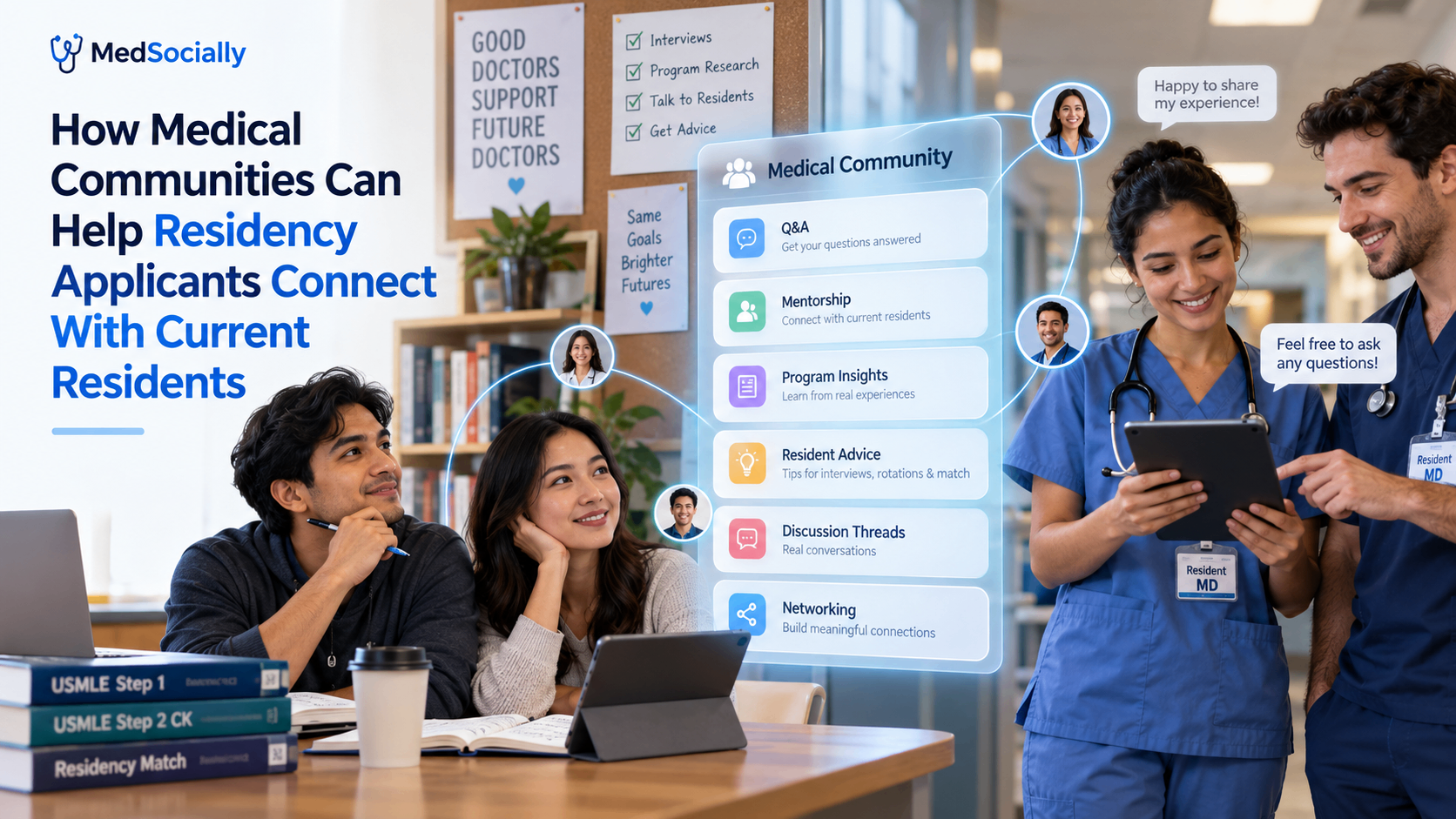
Applying for residency in the United States can feel overwhelming, especially when applicants are trying to understand programs from the outside. Program websites can explain cu...
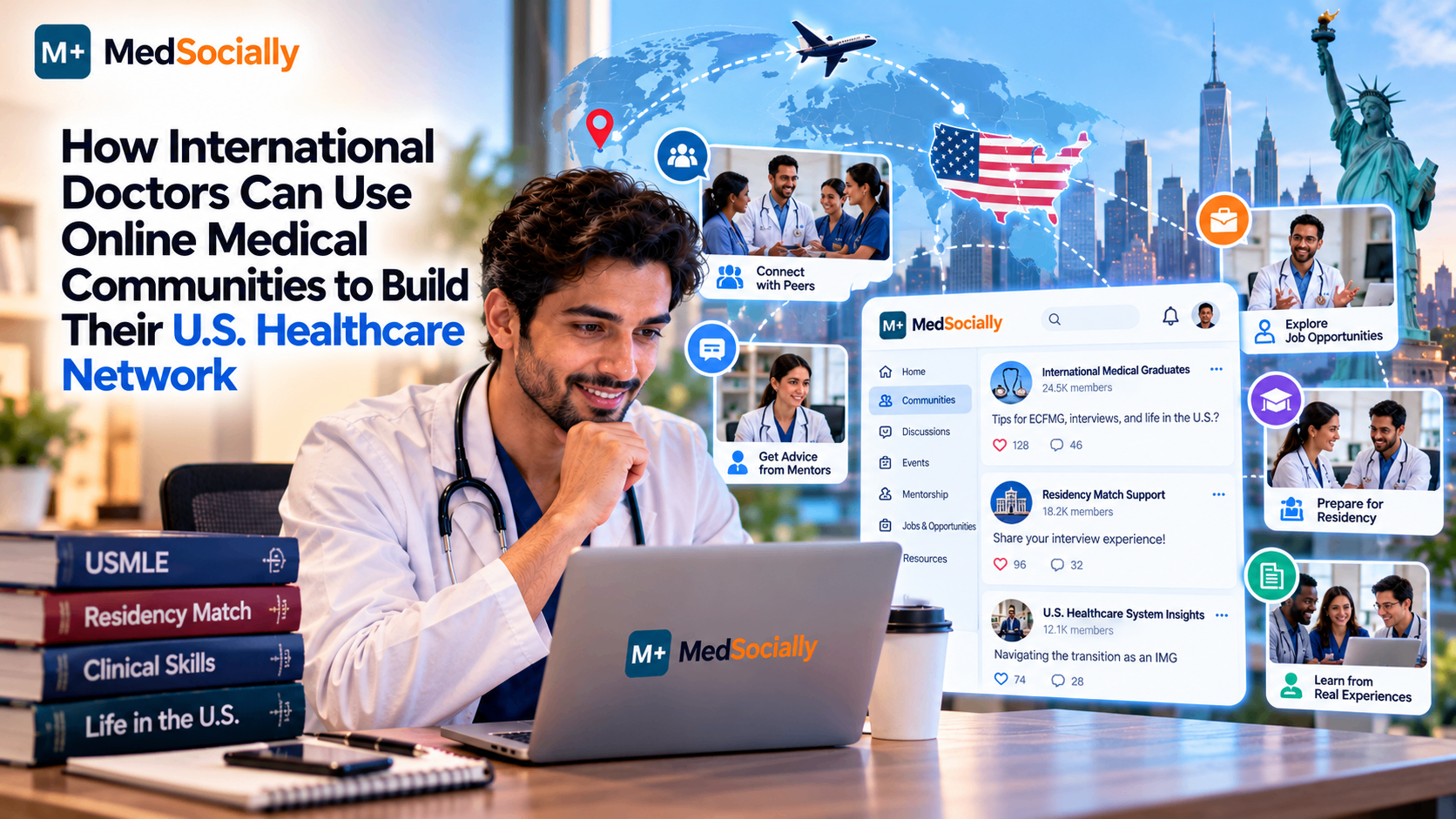
Starting a medical career in the United States can be exciting, but it can also feel unfamiliar and isolating for many international doctors. Even physicians with years of clini...
Social media is no longer just a place where healthcare practices announce new office hours or post a photo on National Nurses Week. For many patients, it has become part ...