Every physician knows the moment. A patient's results do not match the story, the guideline does not quite fit the situation, and the colleague you would normally ask is in another building or another time zone. A case discussion platform for healthcare professionals is designed for exactly that moment. It gives you a space to think aloud with peers, without a formal referral or a lucky hallway meeting.
Discussing cases informally is not a new practice. That is how medicine has always worked. In one survey of physicians, primary care doctors reported receiving 3.2 curbside consultations in the past week, and subspecialists reported receiving 3.6 requests. The curbside consults were mostly used to choose tests and treatment plans and to decide whether a formal consult was necessary.
In a qualitative study published in Mayo Clinic Proceedings, doctors valued curbside consults for rapid, personalized answers and for the two way exchange of information. Participants felt this accelerated care and increased patient confidence. The authors also proposed that information technology could be used to improve the process. That is where a modern case discussion platform comes in.
The hallway only works when the right person happens to be nearby. A solo doctor in a small town may not have a cardiologist down the hall. A resident on a night shift may not want to wake a senior for a question that can wait until morning. An international medical graduate studying for the U.S. system may not have a single physician contact to ask.
Speed carries its own risk. Hospital medicine leaders have said that a brief verbal summary may miss something important, and that a curbside should never be a substitute for seeing the patient. A good online discussion is slower in a useful way. You write the case down, which makes you organize your thinking, and your colleagues respond with more than one point of view.
Imagine a family doctor with a patient who is tired and has some vague lab changes. There is a long waiting list for the nearest specialist. By the next morning, a short de-identified note to a group of colleagues can bring several different points of view. The doctor remains the final decision maker. She simply decides with better input.
Not every online space suits clinical conversation. A strong case discussion platform should include a few basics:
Verified clinician members, so you know who is answering
A structured case format covering history, findings and the specific question
Prompts that remind you to remove identifying details before posting
Specialty tags, so the right colleagues see your post
Clear wording that discussions are educational and not formal consultation
If a platform lacks the first three, keep looking.
Patient privacy is the line you do not cross. The HHS Office for Civil Rights states that the HIPAA Privacy Rule provides two ways to de-identify information, Expert Determination and Safe Harbor, and that properly de-identified information is no longer considered protected health information. In practice that means names, exact dates and other identifiers have no place in a case post.
The AMA points doctors to the same principle. If you are exchanging information professionally with other doctors online, you should follow ethics guidance on confidentiality, privacy and informed consent. A simple habit helps. Before posting, ask whether a colleague at your own hospital could identify the patient. If the answer is maybe, remove more detail. Review your institution's social media and data policies too, since they may be stricter than the baseline.
Physicians are sometimes concerned that giving an opinion online will make them liable. Risk management guidance on curbside consults explains that formality depends on several factors, including whether actions suggest an implied physician and patient relationship and whether the treating physician relied heavily on the advice. Discussions with peers online are best treated as educational input. The treating physician remains responsible for the decision and the chart.
This is why replies work best when they offer reasoning and questions instead of orders. A response such as "Have you thought about checking this?" is more helpful and safer than "Do this." Nothing here is legal advice, so check with your malpractice carrier if you have questions.
Some platforms now provide AI summaries of long threads or literature suggestions. These features can save time. Treat them like any unverified source. Verify the claims and avoid putting patient information into tools your organization has not approved. Our guide to shadow AI in healthcare discusses this risk in greater detail. AI can help organize a discussion, but it cannot replace the expertise of colleagues who have seen comparable patients.
Case discussion is also one of the most practical forms of mentorship. Residents learn how seasoned doctors think. Nurses and allied professionals see how decisions are made. International medical graduates can follow real clinical thinking long before they match. For those looking to expand their professional network, the right online medical communities can turn that learning into lasting relationships, and our overview of medical network platforms will tell you what to look for.
What was the most helpful curbside consult you have ever had? Was it a hallway question, a text to a friend or a thread with colleagues you never met in person? Share your experience in the MedSocially community, and tell us what you would like to see in a case discussion platform.
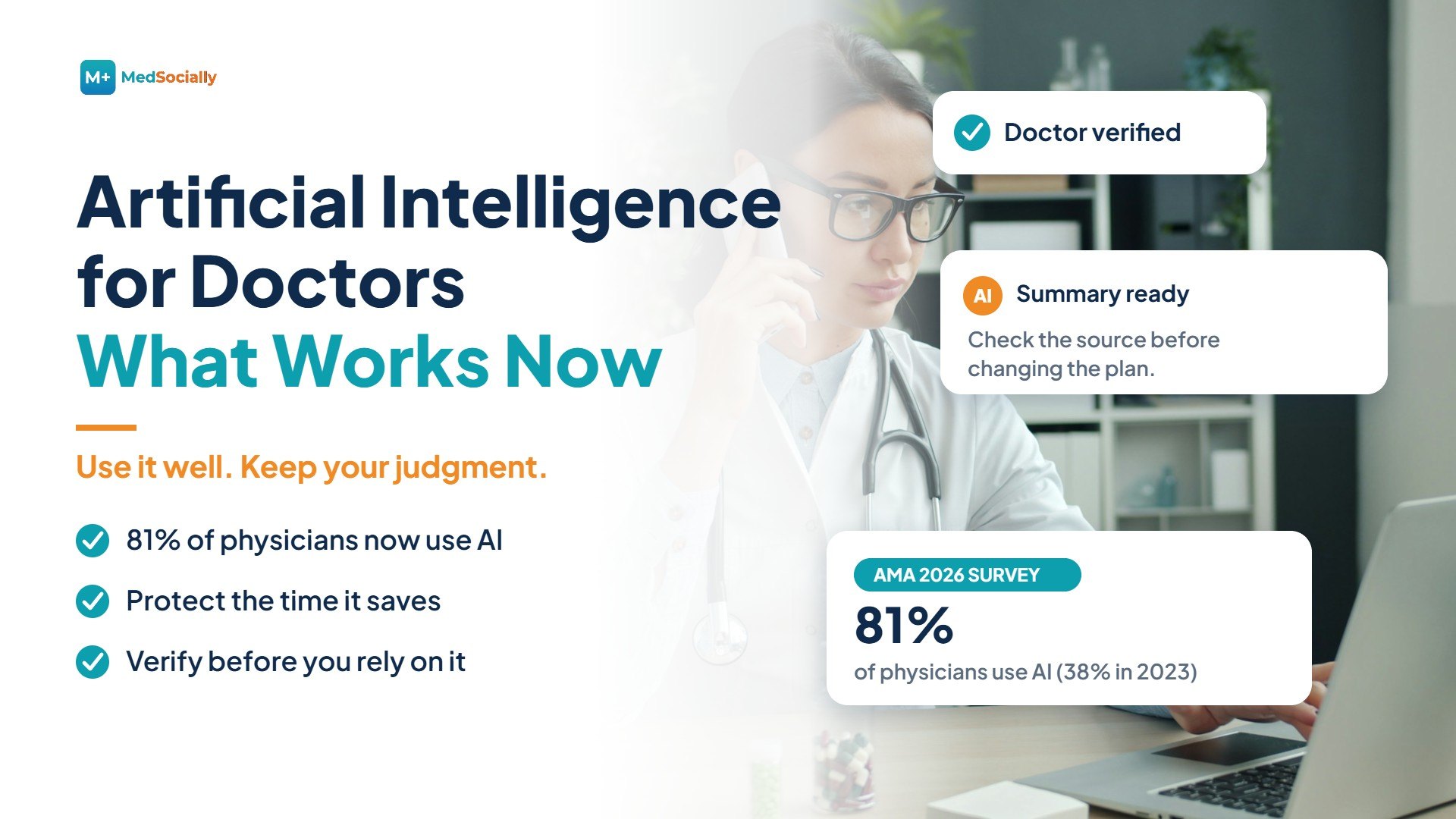
Artificial intelligence for doctors is no longer a novelty. It has become a standard part of daily practice. Many physicians now open an AI tool before they open a journal, and the...
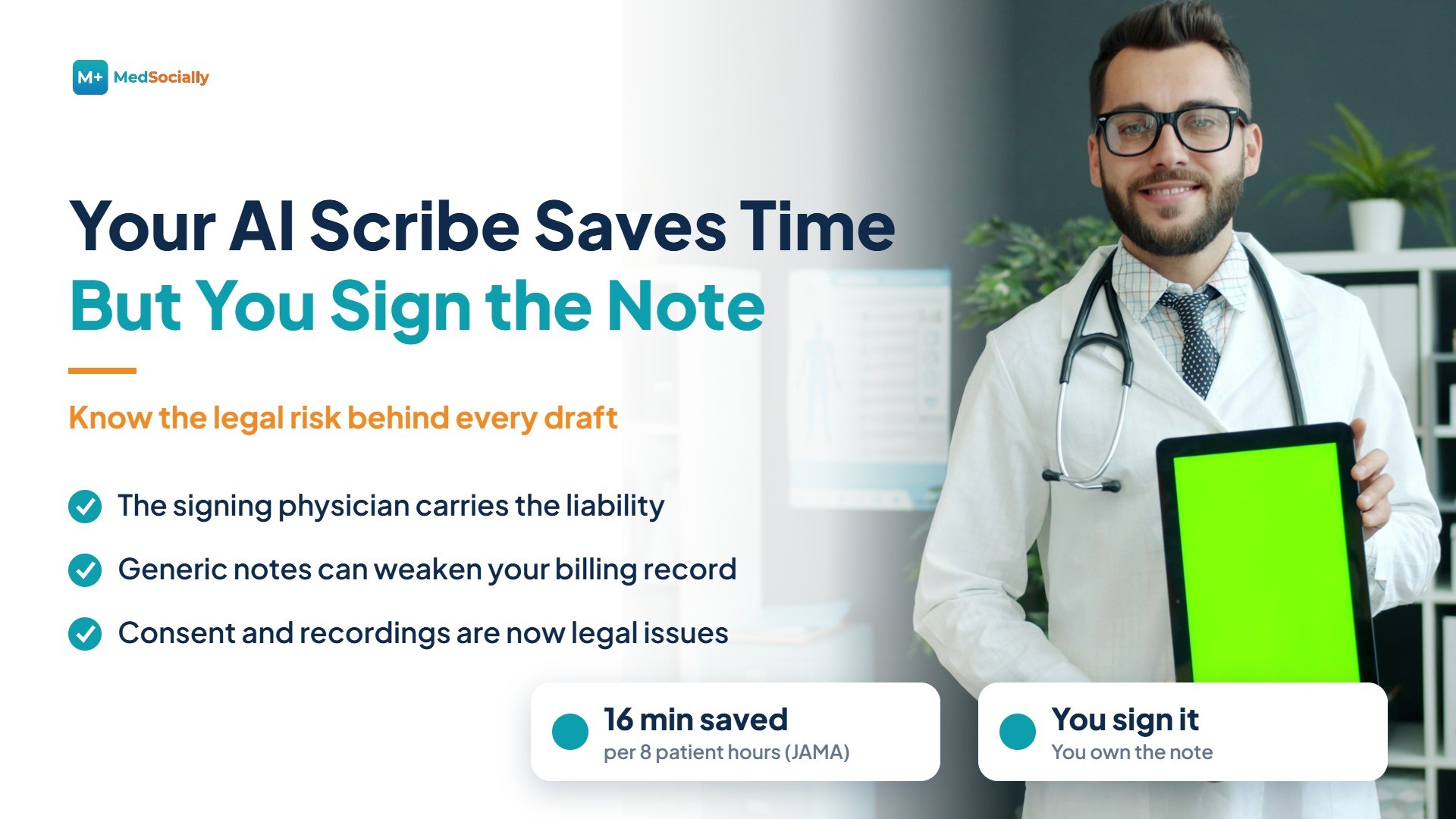
AI scribe documentation has changed the end of the clinic day for many of us. Notes that used to eat an hour after dinner now appear as drafts before the next patient is roomed. Th...
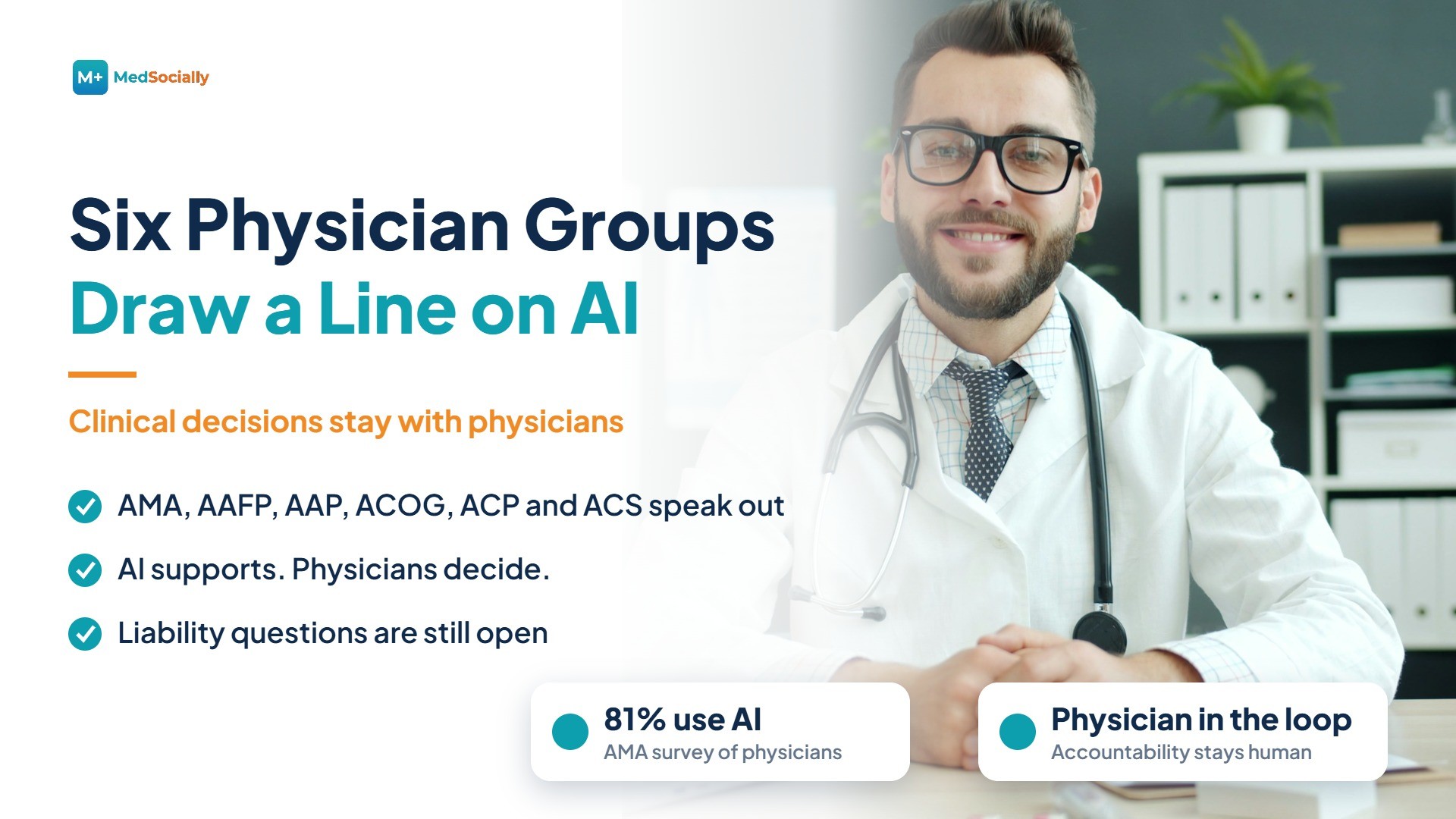
Six major physician groups issued a joint statement on September 30 that said what many of us feel in the exam room. AI is a helpful tool. It does not outperform physicians and it ...
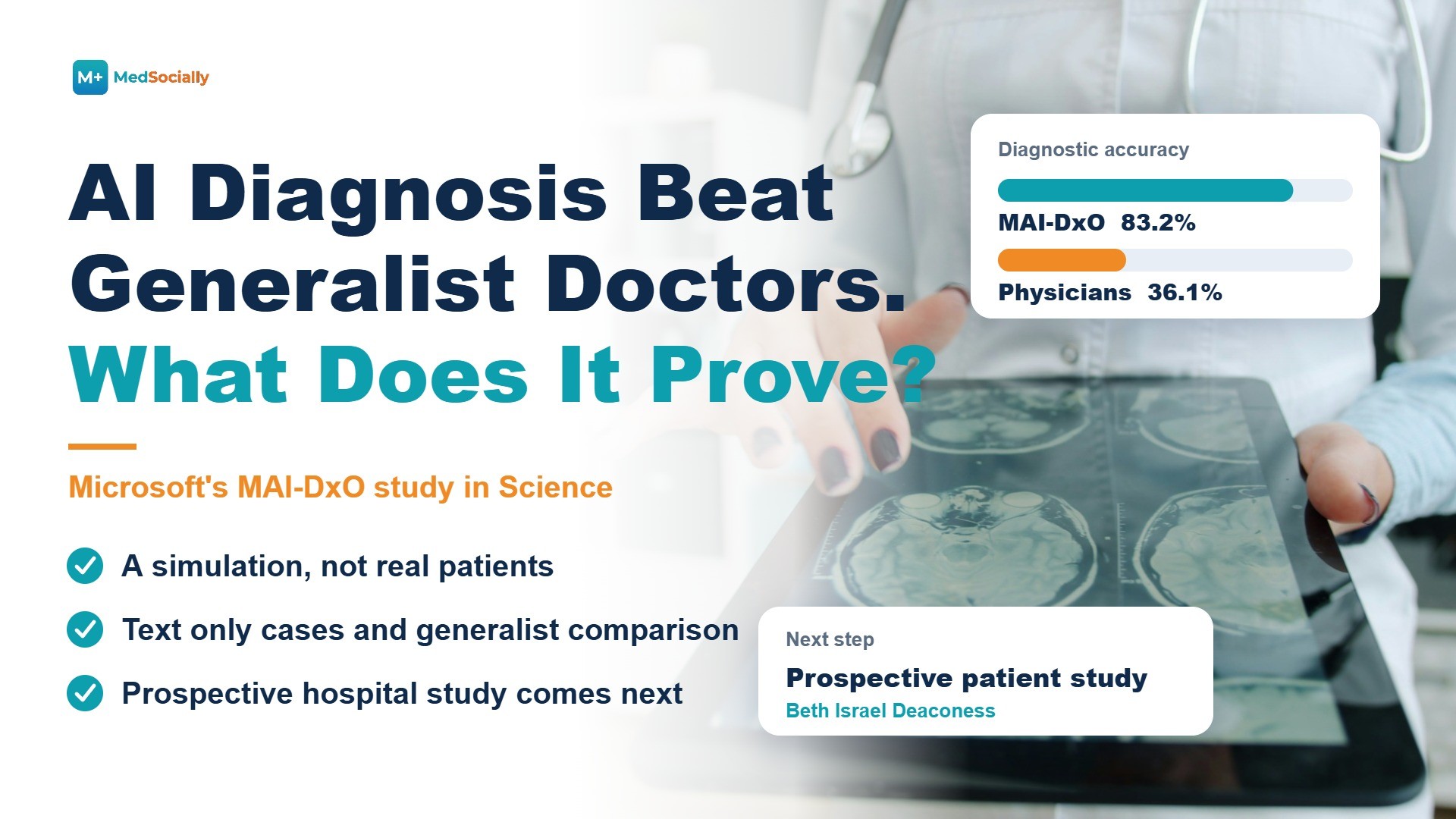
Every doctor should take note of the results of Microsoft's diagnostic AI. In a study published in Science, the system outperformed generalist physicians on difficult diagnostic ca...
Physician burnout seems to be on the decline. It is good news for a profession that has felt exhausted and stressed for years. But another trend deserves attention. Clinics are ope...