Six major physician groups issued a joint statement on September 30 that said what many of us feel in the exam room. AI is a helpful tool. It does not outperform physicians and it is not better suited to make clinical decisions on its own. The signers included the AMA, the American Academy of Family Physicians, the American Academy of Pediatrics, ACOG, the American College of Physicians and the American College of Surgeons. If you care about AI clinical decision making, this statement is worth a slow read. Here is what it says and what it should change in your practice next week.
The statement is not an anti AI stance. It says AI has strong potential to improve care. What it rejects is the framing. Claims that AI is better informed than physicians, or that doctors need a chatbot before they can decide, diminish physician expertise and may erode patient trust. The groups also made a point every clinician will recognize. Doctors assess patients in context and they are responsible for the results.
The statement does not mention any names. It came in the wake of public claims that an AI second opinion is now the standard of care. The groups asked for patient safety and physician expertise to guide how AI is developed and used. They also said they want physicians to help lead that work.
Much of this discussion was sparked by a paper in JAMA published in September by Ezekiel Emanuel and Vinod Khosla. It argued that for cognitive medical tasks AI working alone is likely to beat both physicians working alone and physicians working with AI. It also projected that autonomous AI could be ready for some real world tasks by 2030.
Emanuel told Chief Healthcare Executive that more research is needed on how AI performs in actual clinical care. He said the paper was meant to start planning on payment and regulation and liability. AMA CEO John Whyte took issue with it in Wired and pointed out that some of the studies behind the paper were simulations rather than blinded experiments. A simulation is not a Tuesday clinic where a patient forgets half of her medication list. That gap matters.
Imagine a 58 year old woman who walks in with a printout. A chatbot told her that her tiredness is probably a rare autoimmune disorder. On paper the differential is not unreasonable. But you know she lost her husband in the spring. You know she sleeps about four hours a night and her last labs were normal. The tool had the symptoms. You had the person.
That is the heart of AI clinical decision making. Models are good at pattern matching but weak at anything that was never typed into the box. They cannot see how a patient looks when she says she is fine. They do not hold a license. When a decision goes wrong the physician answers for it. That is why the final call has to stay with someone who can be held accountable.
This is not a story about doctors who shun the technology. A March 2026 AMA survey found that 81 percent of physicians use AI professionally. Medical Economics reported that the survey included nearly 1,700 physicians and that the rate is more than double what it was in 2023. Reported uses include documenting patient conversations, finding current research and preparing patients for discharge.
The same survey found that 85 percent of physicians want a say in how AI is adopted in their practice. So the real divide is not pro AI versus anti AI. It is between tools that physicians choose and shape and tools that come with a promise that doctors are optional. If you want to see how common everyday use has become, the data on how many physicians use AI every week is worth a look.
Survey respondents named clear liability frameworks as a top regulatory priority. That tells you where the worry sits. If an AI second opinion differs from your plan and you follow your plan, who carries the risk if something goes wrong? If you follow the tool and it is wrong, who carries it then? Emanuel himself named payment and regulation and liability as the questions that come next. None of them has a settled answer yet.
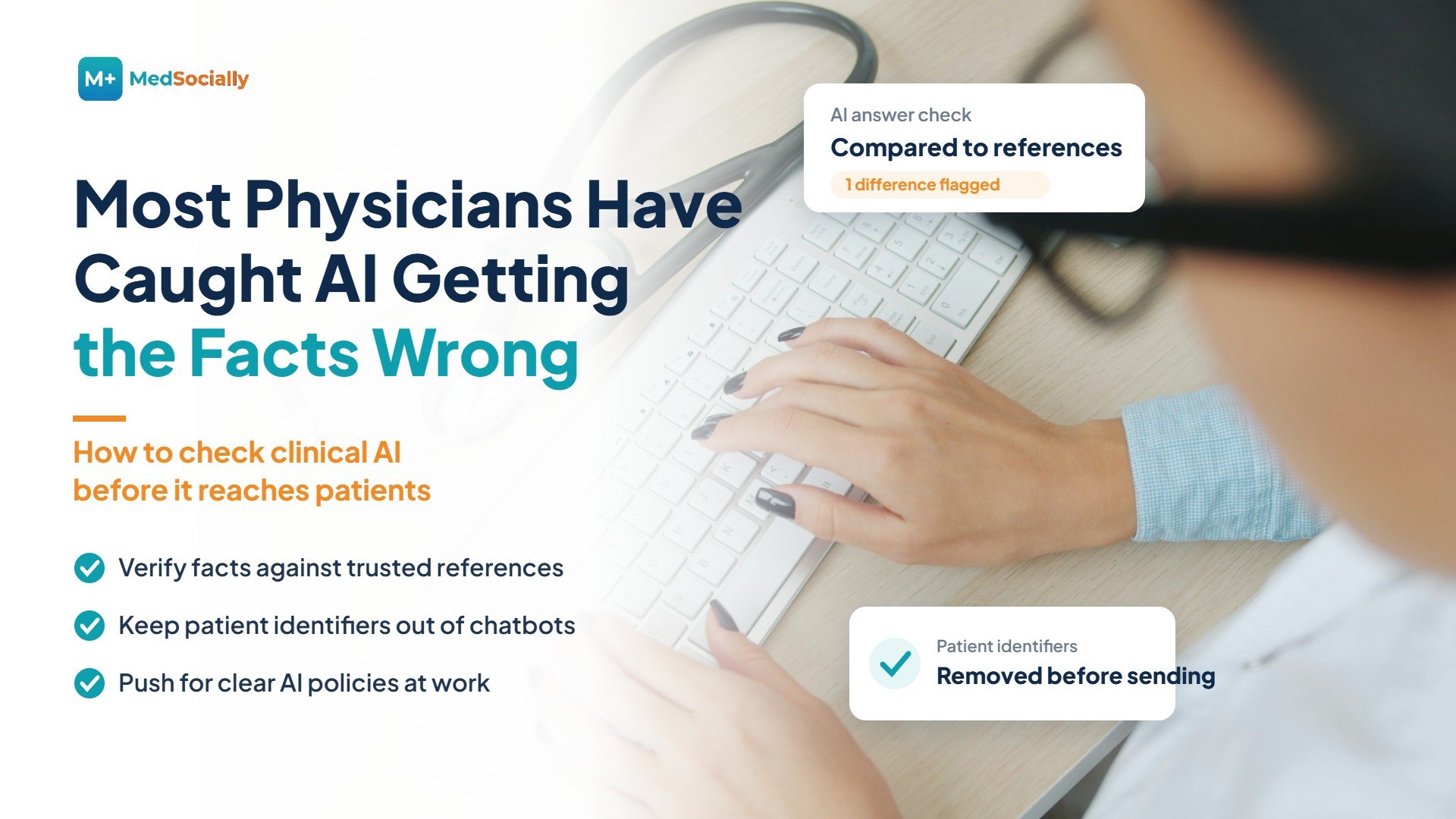
Patients are watching too. They want help from technology but they also want a human being who is responsible for them. Research on patient trust in AI keeps pointing to human oversight as what makes the technology acceptable. And before any tool reaches a patient, physicians need the habit of learning to verify AI answers rather than accepting them because they sound fluent.
You do not have to choose between embracing AI and resisting it. Treat it like a sharp but unlicensed colleague. Here is a short routine that keeps physician oversight intact:
Ask the tool to show its reasoning and its sources and then check them yourself.
Decide ahead of time which tasks you will delegate such as documentation or literature searches and which decisions stay entirely yours.
Note in the chart when you accepted or rejected an AI suggestion and why.
Tell patients plainly when AI helped so trust is built on honesty and not surprise.
This is also where the push for safer tools that physicians actually want becomes concrete. Safer tools are built with physician input from the start.
The long running question of whether AI will replace doctors is the wrong question. The better one is who decides when AI is wrong and who answers for it. The six physician groups gave a clear answer. Physicians stay accountable and AI supports them.
You have probably faced a moment when an AI suggestion did not fit the patient in front of you. How did you handle it? Share your experience with colleagues in the MedSocially community and help shape what responsible AI clinical decision making looks like in everyday practice.
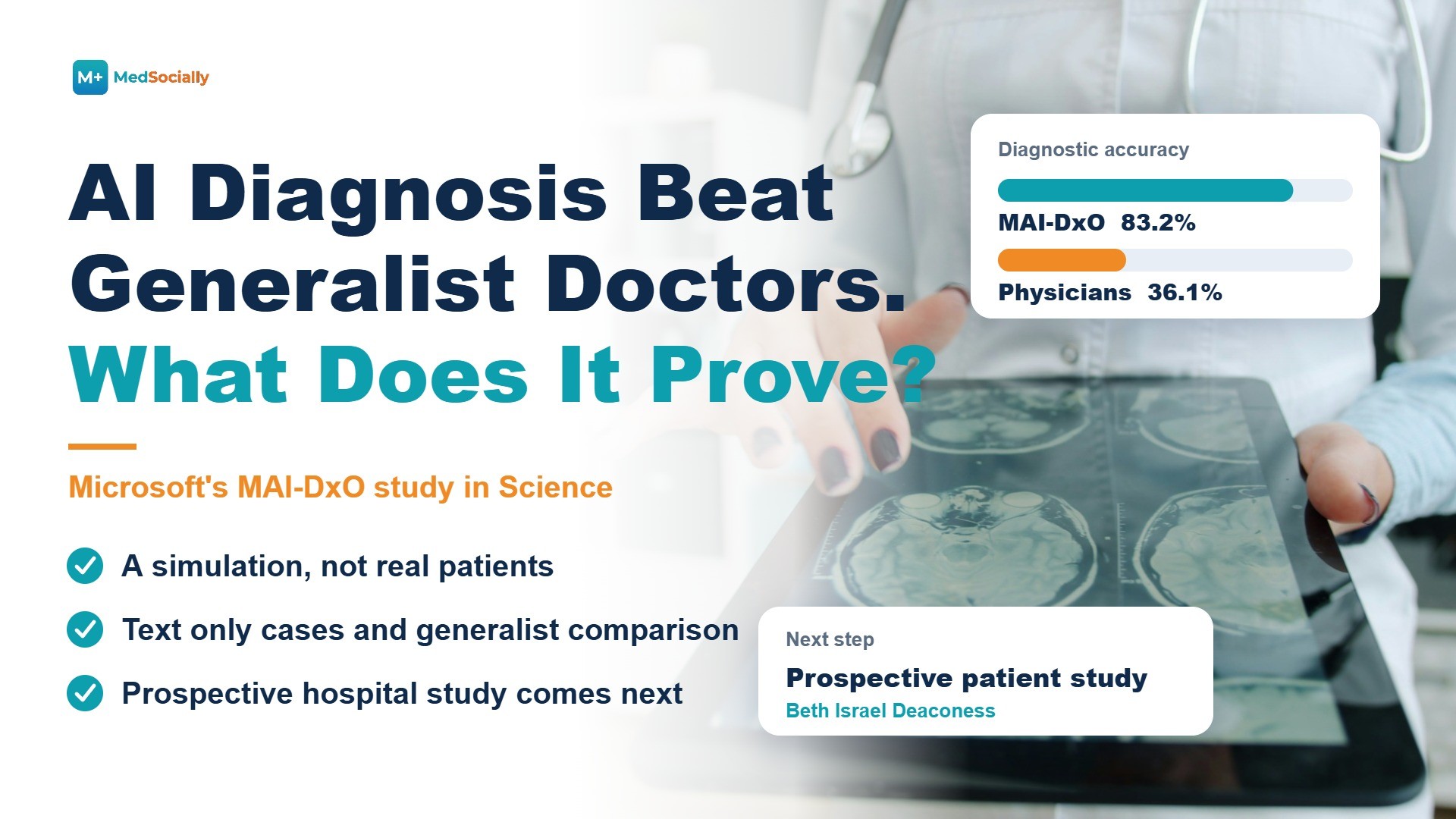
Every doctor should take note of the results of Microsoft's diagnostic AI. In a study published in Science, the system outperformed generalist physicians on difficult diagnostic ca...
Physician burnout seems to be on the decline. It is good news for a profession that has felt exhausted and stressed for years. But another trend deserves attention. Clinics are ope...
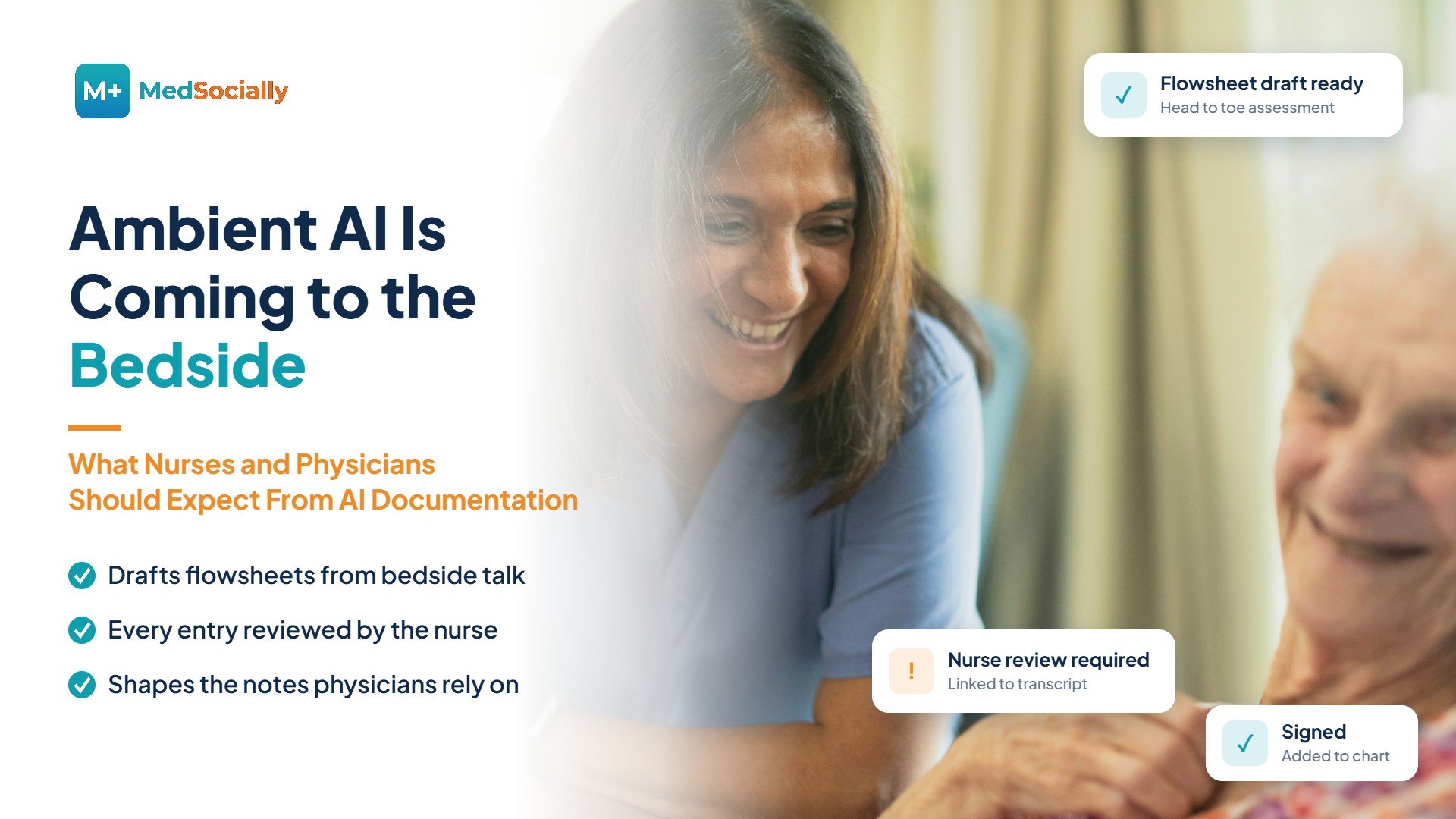
Ambient AI nursing documentation is moving from concept to clinical use. For the last several years these tools were built around physician notes. Now they are moving into inpatien...
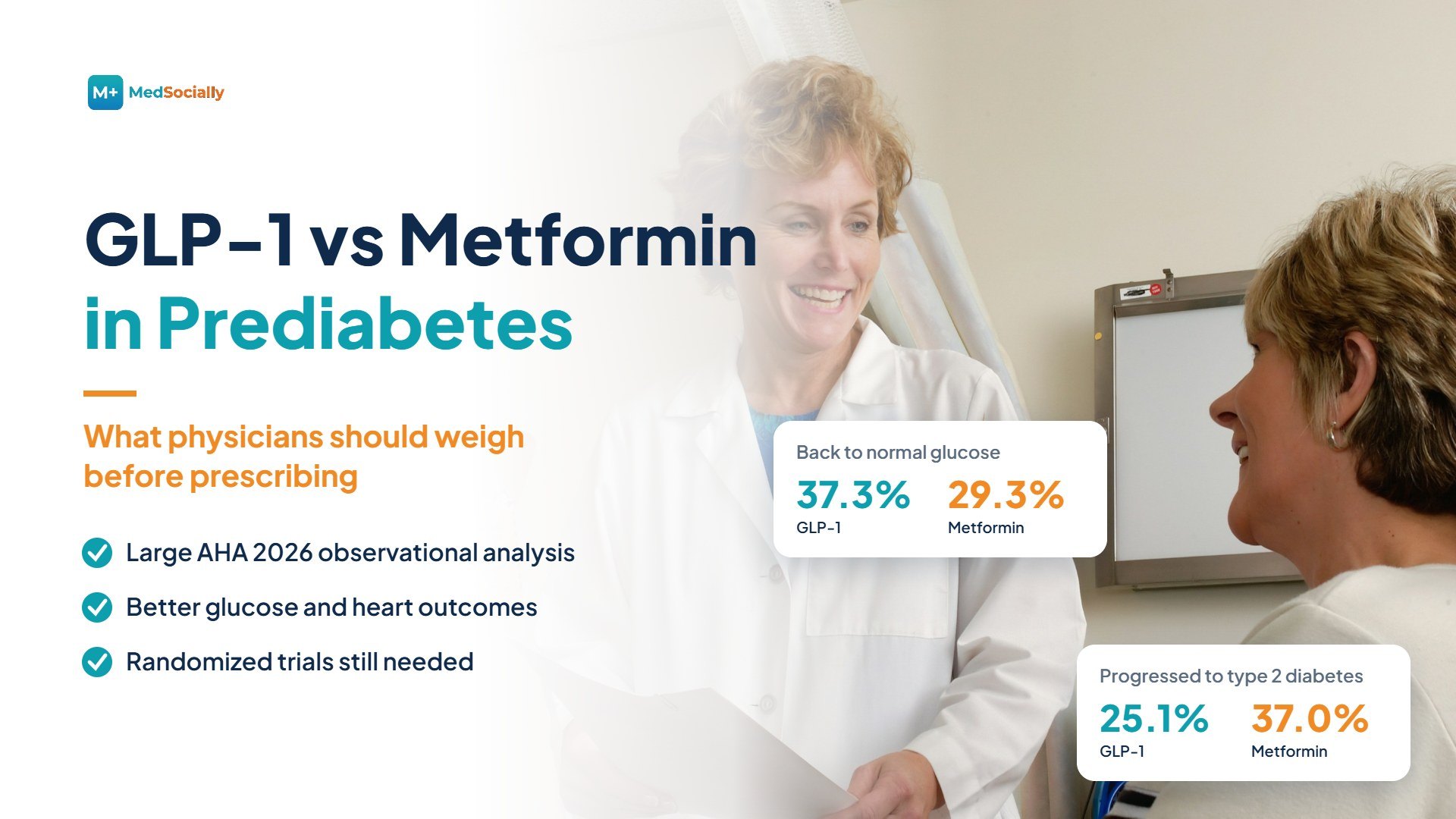
You have a patient with prediabetes in your exam room, and she asks a question you have heard more than once this year. "If these weight loss shots work so well, why am I still on ...
AI can write a convincing clinical explanation in seconds. Convincing does not always mean correct. As more of us bring clinical AI tools into daily practice, the question is no lo...