Healthcare professionals are active online, but their digital needs differ from those of the average social media user. Physicians, nurses, pharmacists, medical students, researchers, healthcare executives, and industry professionals do not simply need another place to scroll or chase viral trends. They need trusted digital environments where professional knowledge, credible health information, networking, career development, and responsible public engagement can coexist.
That explains why social media for healthcare professionals must move beyond generic engagement models. Mainstream platforms are designed to maximize attention and time spent on the app. Healthcare communities require a different foundation: relevance, verification, privacy, accuracy, professional context, and safeguards against misinformation.
As healthcare digital engagement grows, platforms and organizations that understand specialized healthcare social media needs will be better positioned to build trust and long-term participation.
Social media increasingly shapes how people discover health information, evaluate medical claims, discuss symptoms, select providers, and connect with others who share similar experiences.
Pew Research Center reported in April 2026 that 36% of U.S. adults obtain health information from social media at least sometimes. Another 2026 Pew analysis found that 40% receive health and wellness information from influencers or podcasts, rising to approximately half of adults under age 50.
The public also wants qualities that qualified professionals are well equipped to provide. Seventy-five percent of U.S. adults say relevant medical training is highly important in a health information source. Meanwhile, 73% value transparency about conflicts of interest, and 72% value information that is easy to understand.
This creates both an opportunity and a responsibility. Healthcare professionals can use digital platforms to educate, clarify, advocate, mentor, collaborate, and humanize medicine. However, they need solutions designed around healthcare realities rather than generic consumer behavior.
Generic social networks offer broad reach, but reach alone does not produce meaningful healthcare engagement. Their algorithms frequently favor simplified, emotionally charged, or controversial content because it generates reactions. Medical communication, by contrast, often requires nuance, uncertainty, context, and careful interpretation.
A dramatic claim such as “one food cures inflammation” may outperform a clinician’s balanced explanation of risk factors, evidence quality, and individual variation. The responsible message may be less sensational, but it is considerably more useful.
Mainstream platforms also mix professional education, entertainment, politics, advertising, personal updates, and unverified advice within the same feed. For a healthcare worker seeking clinical insights, mentorship, research discussions, or career opportunities, this creates substantial noise.
Healthcare professionals therefore need more than an audience. They need structured and credible communities that help them find the right people, discussions, educational resources, and professional opportunities.
Health misinformation remains one of the most serious weaknesses of generic social media. The World Health Organization describes an infodemic as an excess of information, including false or misleading information, that makes trustworthy guidance harder to identify.
The problem is becoming more complex with generative artificial intelligence. In 2026, the American Medical Association warned about AI-generated “deepfake doctors” that impersonate physicians and promote unproven treatments. Such content can appear authoritative while lacking accountability, valid credentials, or scientific support.
A tailored healthcare platform can respond with:
Identity and credential verification
Professional role indicators
Links to supporting evidence
Conflict-of-interest disclosures
Specialty-based moderation
Source and content labeling
Clear distinctions between education and individualized medical advice
Verification will not eliminate misinformation, but it adds essential context. Users should be able to see whether a post comes from a licensed physician, registered nurse, researcher, medical student, patient advocate, healthcare company, or anonymous account.
That context matters when people evaluate health claims, treatment recommendations, research interpretations, and commercial promotions.
Healthcare networking is highly specialized. A cardiologist may want to connect with researchers, device innovators, fellows, administrators, and referring physicians. A nurse may seek leadership resources, specialty communities, continuing education, and workflow discussions. A medical student may need mentorship, residency guidance, research collaborators, and exposure to different specialties.
Generic platforms rarely organize these relationships effectively. Job titles may be incomplete, credentials difficult to verify, and algorithms more likely to prioritize popularity than professional relevance.
Social media for healthcare professionals should support:
Specialty-based professional discovery
Verified healthcare profiles
Local and global medical communities
Research interests and collaboration
Mentorship matching
Event-based networking
Healthcare organization pages
Private professional groups
These features turn passive connections into practical professional value.
Research has shown that healthcare professionals use social media for learning, collaboration, professional development, and career advancement. The opportunity is to make those activities easier, safer, and more intentional.
Medicine evolves continuously. New evidence, guidelines, technologies, public health threats, and operational challenges require lifelong learning. Social media can accelerate knowledge exchange when professionals share clinical perspectives, conference insights, research summaries, implementation lessons, and workflow challenges.
Yet healthcare knowledge cannot be treated like ordinary user-generated content. A useful healthcare community platform should support:
Citations and links to original research
Specialty and topic tags
Expert-led discussions
Archived educational threads
Digital journal clubs
Case-based learning
Research collaboration
Content review and correction systems
It should also distinguish between established evidence, emerging research, expert opinion, personal experience, and commercial promotion. These categories are frequently blurred on generic platforms.
Tailored healthcare content strategies can make information more useful by matching it to the intended audience and purpose. A research update for an oncologist should not be framed like a patient education post about cancer screening. The topic may overlap, but the language, depth, supporting evidence, and desired action will differ.
Healthcare professionals operate under privacy laws, ethical standards, institutional policies, and public expectations that do not apply to most social media users.
The U.S. Department of Health and Human Services states that the HIPAA Privacy Rule protects medical records and other individually identifiable health information. The American Medical Association also advises physicians to safeguard confidentiality, maintain professional boundaries, and recognize that online conduct can affect public trust in the profession.
Generic tools may offer basic privacy settings, but healthcare users need contextual safeguards. These may include:
Prompts about identifiable patient details
Patient consent documentation
Secure professional communities
Separate professional and personal identities
Organizational approval workflows
Healthcare-specific moderation
Clear policies for discussing clinical experiences
Healthcare-focused platforms should educate users rather than rely only on enforcement. The goal is not to prevent authentic discussion. It is to help professionals communicate responsibly without exposing patients, colleagues, healthcare organizations, or themselves to unnecessary risk.
Healthcare professionals are more likely to participate when content reflects their roles, pressures, and interests. A generic motivational quote may generate a quick reaction, but a specialty-specific discussion about reducing documentation burden, improving clinical handoffs, managing difficult conversations, or interpreting a new study can create lasting value.
Effective healthcare content may include:
Short, evidence-based educational videos
Specialty-specific clinical discussions
Career advice and mentorship
Research summaries and journal clubs
Healthcare policy and regulatory updates
Professional events and continuing education
Workflow improvement ideas
Leadership and well-being discussions
Responsible medical humor
Patient communication resources
Format matters as well. Short-form video can support discovery and simplified education, while longer posts, newsletters, live discussions, webinars, and private communities support deeper learning.
The best healthcare content strategy does not use one format for every purpose. It matches the format to the audience, complexity of the subject, and desired outcome.
Health content often spreads because it feels personal, accessible, and immediate. Healthcare professionals should not respond by making accurate information cold or overly technical. They should combine evidence with empathy, clarity, and relatable communication.
Pew’s 2026 research shows that people value both medical expertise and easy-to-understand information. Credibility and accessibility should not be treated as competing goals.
Healthcare professionals can build trust by:
Explaining what is known and what remains uncertain
Recognizing when recommendations may differ
Clarifying when individualized care is necessary
Disclosing relevant commercial relationships
Citing credible sources
Correcting errors openly
Avoiding exaggerated medical conclusions
A healthcare-focused social environment can reinforce these behaviors through community standards, recognition systems, and moderation processes that reward helpfulness and credibility rather than controversy alone.
A purpose-built healthcare social network should combine the engaging qualities of social media with the structure and safeguards of a professional community.
Important capabilities include verified professional profiles, specialty-based communities, multimedia posting, educational content, research sharing, event management, direct networking, organization pages, privacy controls, moderation, and clear content labeling.
It should also create room for healthcare professionals to socialize.
Clinicians are not only sources of medical information. They are people who need community, humor, peer support, creative expression, and professional belonging. A successful platform should not feel like another mandatory hospital portal or academic database. It should be useful, credible, engaging, and enjoyable.
The key is balance. Too much formality can suppress participation, while too little structure can reproduce the misinformation, noise, and professionalism concerns found on generic platforms.
Healthcare organizations and platforms should begin by identifying the specific professionals they want to serve. Nurses, physicians, researchers, students, administrators, and healthcare entrepreneurs may share an industry, but they do not have identical content needs.
An effective strategy should:
Segment audiences by role, specialty, and professional interest.
Verify the identity and credentials of professional contributors.
Establish clear privacy and content standards.
Prioritize evidence-based and practically useful content.
Offer both public education and private professional communities.
Use multiple formats for different learning preferences.
Measure meaningful interactions rather than impressions alone.
Include healthcare professionals in platform and content design.
Engagement should be evaluated through the quality of discussions, professional connections, event participation, educational value, and community retention. Likes and follower counts may be useful indicators, but they should not be the only measures of success.
Healthcare professionals seek more than generic social media because their responsibilities, risks, and goals are different. They need digital spaces that support trusted information, professional networking, continuous learning, ethical communication, patient education, career growth, and meaningful community.
The future of social media for healthcare professionals will not be defined by copying mainstream platforms and adding medical branding. It will depend on designing around genuine healthcare social media needs from the beginning.
As more people turn to social platforms for health information, qualified healthcare voices must become easier to find, understand, and trust.
Tailored healthcare social media solutions can help professionals participate more effectively while giving patients and the public access to clearer, more credible, and more responsible health communication.
Social media is no longer just a place where healthcare practices announce new office hours or post a photo on National Nurses Week. For many patients, it has become part ...
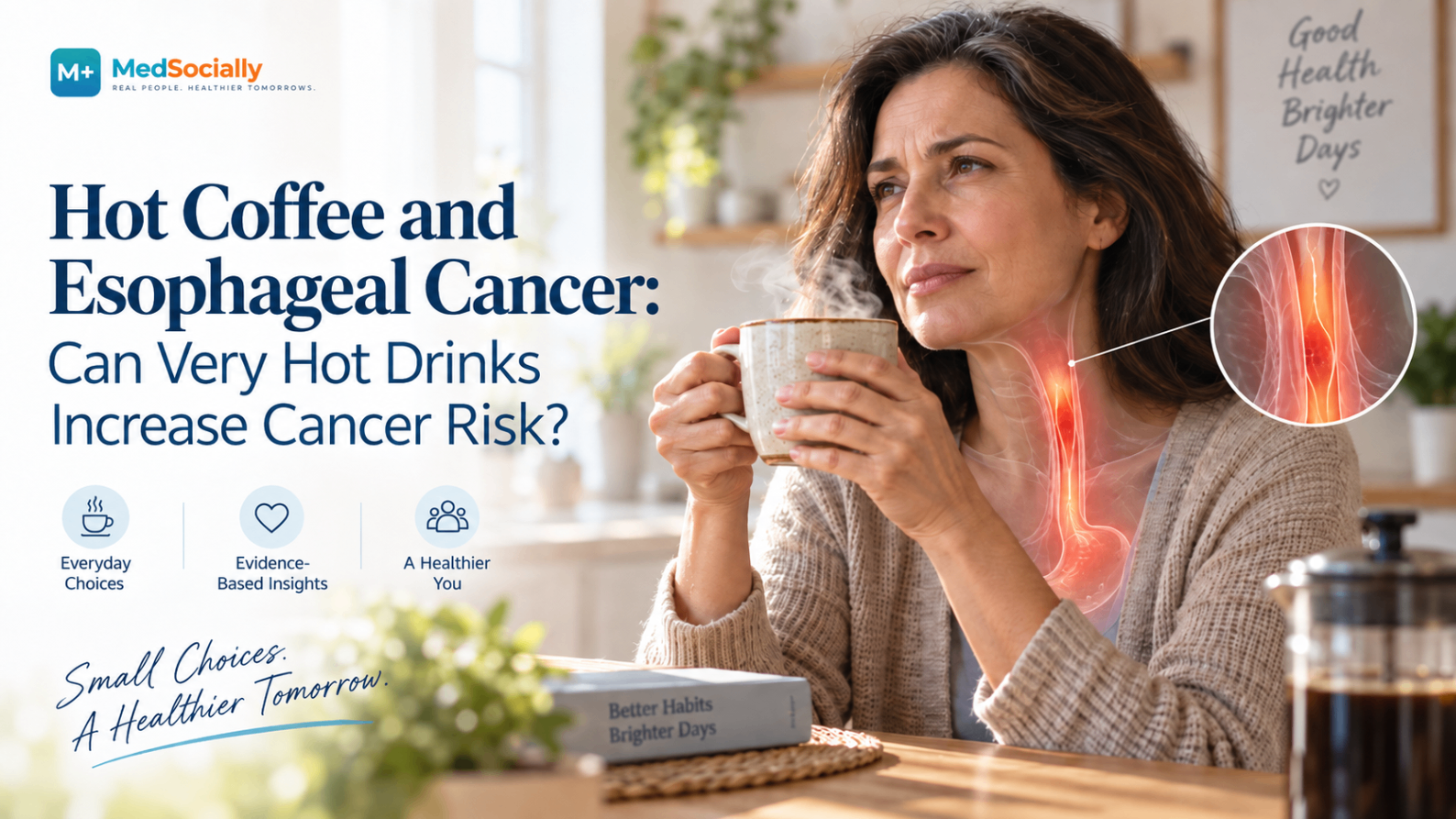
For millions of people, coffee is part of the daily routine. It starts the morning, fills the gap between meetings and often provides a small moment of comfort during a busy day...