For years, seasoned international medical graduates who wanted to work in the U.S. faced the same obstacle. They had to complete residency in this country before receiving a full license, no matter how many years they had spent caring for patients abroad. That is beginning to shift. As of late 2026, more than two dozen states have laws that let qualified internationally trained physicians practice without repeating U.S. residency training.
This is an opportunity worth a serious look for physicians who have been treating patients overseas for years. Still, a new law does not guarantee a license or a job. You need to understand the requirements, the limits and the realities on the ground.
Communities around the country keep feeling the physician shortage. Rural hospitals, smaller health systems and underserved areas often have a hard time attracting and keeping physicians. At the same time, many doctors with years of experience who trained abroad are not able to practice here.
So states are asking whether a physician always needs to repeat an entire residency to show the right knowledge, skills and professional judgment. An alternative licensure pathway offers another route. Instead of starting over, states assess prior training and experience and allow physicians to practice under specific conditions. The point is not to lower standards. It is to give qualified physicians another way to meet them. For patients in areas with limited access to care, that could mean more chances to see a doctor.
Eligibility varies a lot by state. There is no national application and no uniform set of rules. Still, most pathways share a few common expectations:
ECFMG certification and the required USMLE exams, with Step 3 often needed for full licensure.
Several years of practice abroad, commonly three to five.
A job offer from an approved employer, often in an underserved or shortage area.
Immigration status that allows medical practice in the United States.
A provisional medical license with supervised practice and satisfactory evaluations.
That provisional or limited period usually runs one to three years. A full license may follow after two to five years of compliant practice, depending on the state. Someone who qualifies in one state may not qualify next door. And a provisional license does not mean a physician can work independently or change employers at will. Read the medical board's rules closely before you accept a job or plan a move.
Not always. Passing a law is the starting line, not the finish. Medical boards still have to write regulations, build an application process and decide how they will assess physicians. Employers need their own plans for hiring, supervision and evaluation.
Some states are already taking applications. Others, such as Nebraska and Vermont, will not open until 2027 or 2028. So far the numbers are modest. Washington has licensed about 50 physicians through its pathway. Illinois had issued four provisional licenses by mid 2026 with more applications under review.
Picture an experienced internist practicing overseas who hears that a state has approved a new pathway. She passes her exams and starts calling hospitals. Then she learns the board has not finalized its application process. The law is real. But she cannot see patients yet. That is why checking a state's implementation status matters as much as reading the statute.
Letting experienced physicians skip residency raises a fair question. How do we know they are ready for the way medicine works in the U.S.? In 2023 the Federation of State Medical Boards, the ACGME and Intealth formed the Advisory Commission on Additional Licensing Models to work on exactly that. Its guidance calls for supervision by licensed physicians in the same specialty as the applicant. The AMA has gone further. It recommends assessing these physicians across the six core competencies with supervisors who are board certified in the same specialty.
Now imagine an internationally trained internist joining a community hospital on a provisional medical license. He has managed diabetes, heart failure and complex inpatient cases for years. What may be new to him are our documentation rules, the electronic health record, local communication norms and how discharges work. A good supervisor evaluates his clinical judgment and helps him get comfortable with those systems.
Supervision should never turn into an excuse to treat experienced colleagues as cheap labor. The AMA also stresses fair treatment and protection of their rights as employees. For hospitals and supervisors, that means clear expectations, constructive feedback and real professional respect.
For many international medical graduates, the exams are the easier part. Finding an approved employer willing to hire and supervise can be much harder. Hospitals have to sort out credentialing, malpractice coverage, scope of practice and the staff time it takes to evaluate a new physician. Immigration is another hurdle. A physician can meet every licensing standard and still need legal authorization to work.
Ask direct questions before you sign anything. Will there be a structured orientation? Who supervises your clinical work? How will your performance be measured? What happens if the job ends before you reach full licensure? A role with vague expectations or little job security brings its own problems. The quality of the position matters as much as the license.
If one of these pathways interests you, start early. Focus on states whose programs are actually up and running, not just states that recently passed a law. Confirm your ECFMG status, exam requirements and practice history, and check whether your specialty is eligible. Keep your training records, employment history and proof of recent clinical practice organized. When you talk to employers, ask specifically about supervision, credentialing and the path from provisional to full licensure.
For U.S. physicians who will work alongside these colleagues, preparation looks different. An experienced physician may need orientation to local workflows without needing to relearn medicine. That experience deserves respect. Patient safety still calls for careful assessment. Hospitals that set these programs up thoughtfully will be in a better position to recruit strong physicians while keeping clear clinical standards.
These pathways mark a real shift in how states judge internationally trained physicians. They accept that clinical competence can be built outside the United States while keeping sensible oversight in place. Legislation on its own will not fix the physician shortage. Success depends on how boards implement the rules, whether employers participate, how fairly supervision works and how transparent the process is.
For international medical graduates, the best approach is cautious optimism backed by careful preparation. For U.S. physicians, this is a chance to welcome experienced colleagues and help set expectations that protect patients and support professional growth.
What has your experience been with these new pathways? Are you an IMG weighing options without repeating residency, or a physician at a hospital considering one of these programs? Share your experience and questions with colleagues in the MedSocially community. Your perspective could help someone make a better career decision.
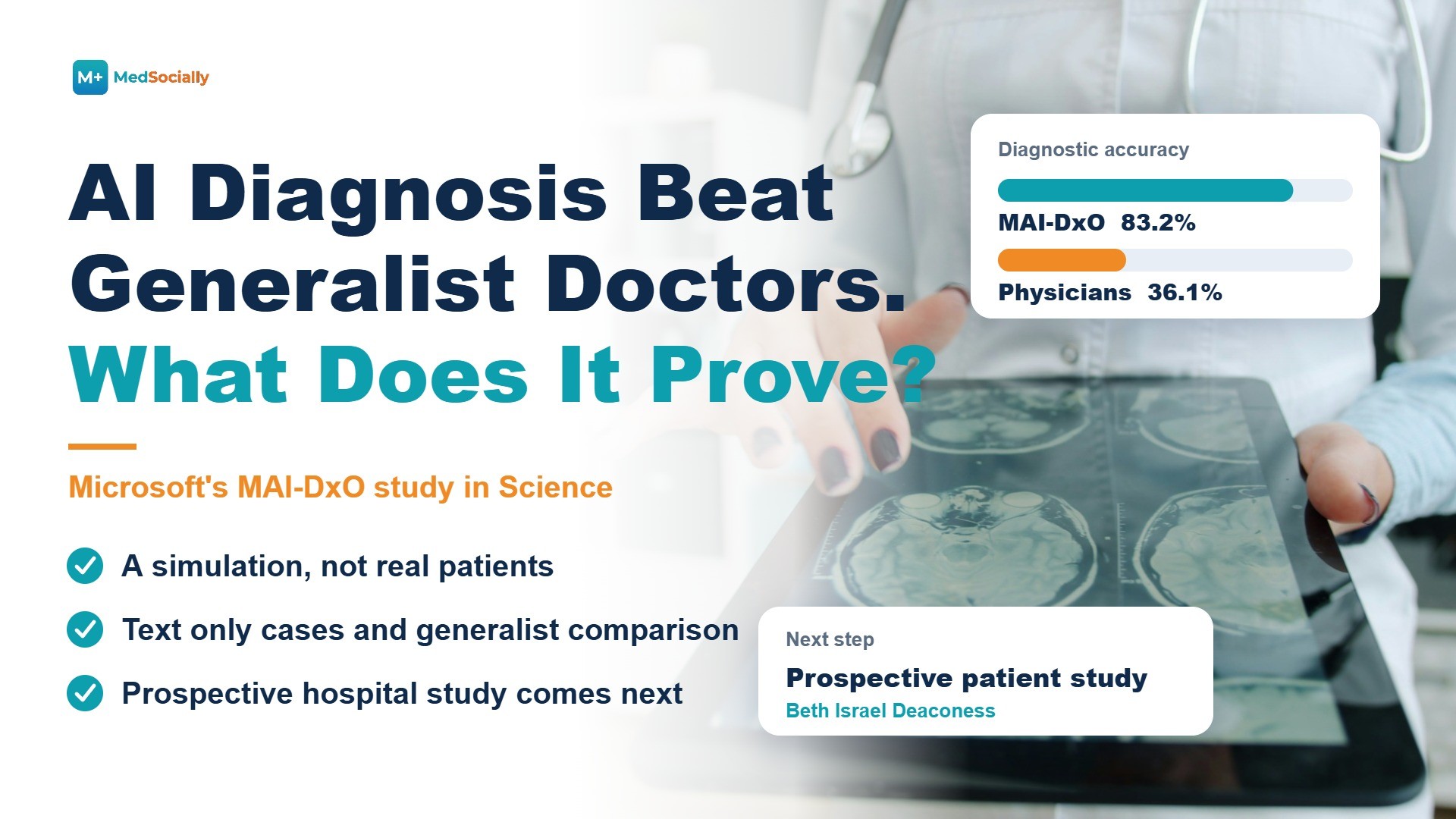
Every doctor should take note of the results of Microsoft's diagnostic AI. In a study published in Science, the system outperformed generalist physicians on difficult diagnostic ca...
Physician burnout seems to be on the decline. It is good news for a profession that has felt exhausted and stressed for years. But another trend deserves attention. Clinics are ope...
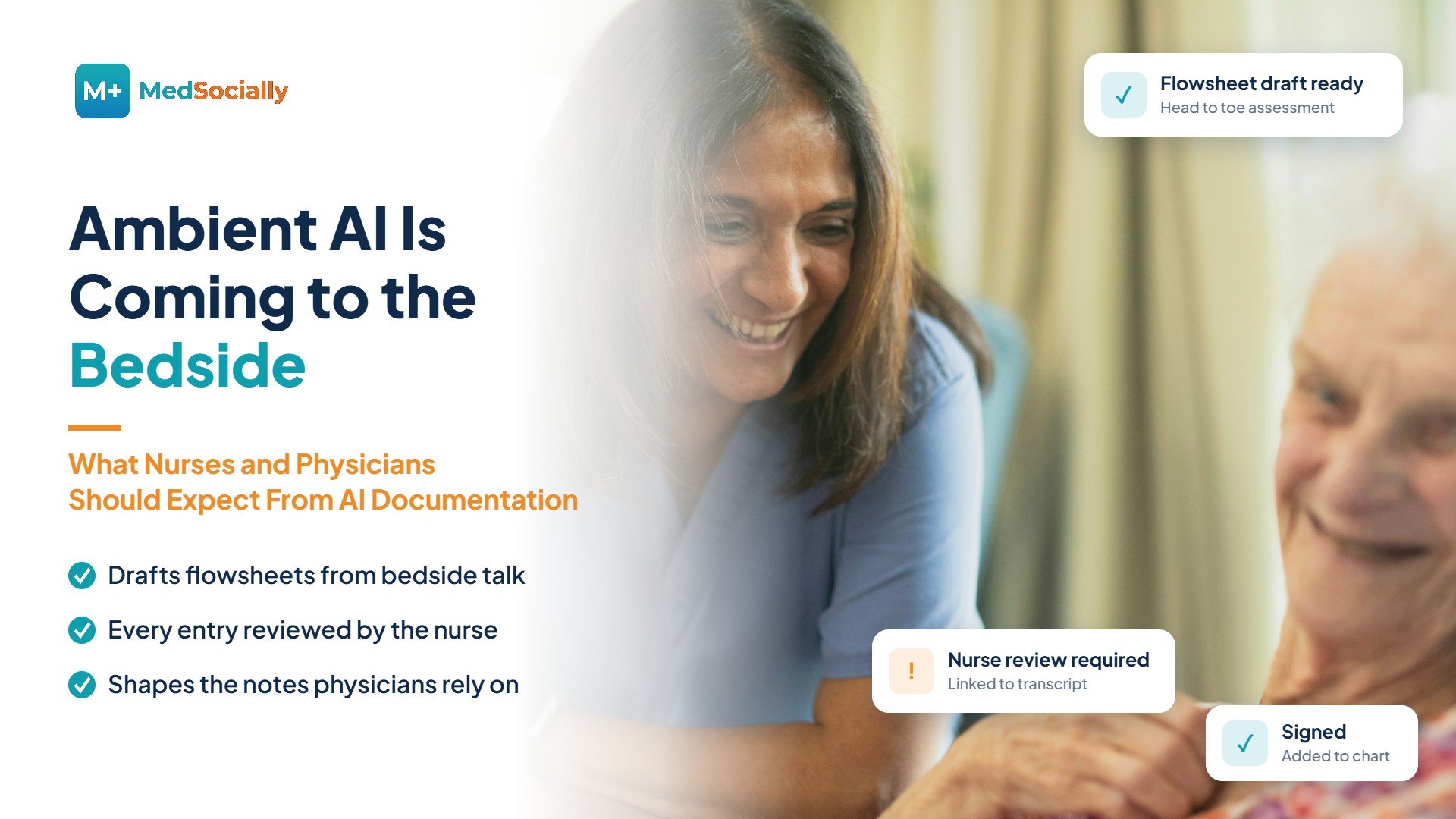
Ambient AI nursing documentation is moving from concept to clinical use. For the last several years these tools were built around physician notes. Now they are moving into inpatien...
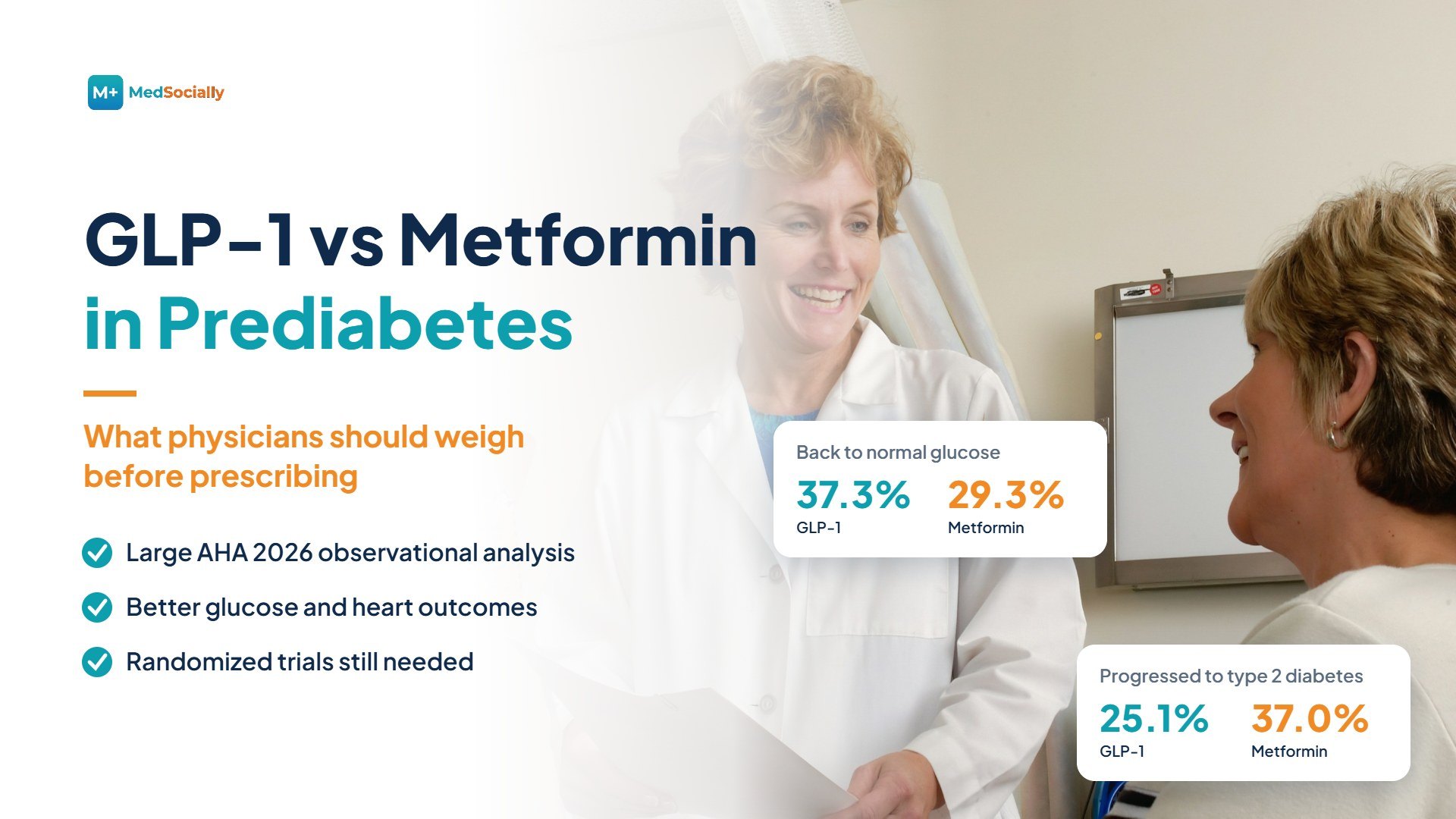
You have a patient with prediabetes in your exam room, and she asks a question you have heard more than once this year. "If these weight loss shots work so well, why am I still on ...
AI can write a convincing clinical explanation in seconds. Convincing does not always mean correct. As more of us bring clinical AI tools into daily practice, the question is no lo...