AI is showing up in exam rooms, hospital workflows and insurance decisions faster than many patients expected. A new Pew Research Center survey points to something physicians should take note of. Patient trust in AI depends heavily on whether a human stays responsible for the final decision.
Patients are not rejecting technology. Plenty of them welcome tools that make healthcare more efficient. What they fear is losing the doctor's judgment, attention and accountability. For clinicians that distinction matters more than ever.
The Pew survey released in late October reveals a clear split in how Americans view AI in medicine. Most people are fine with AI doing administrative tasks like scheduling appointments and documenting visits. When AI moves into diagnoses, treatment decisions or insurance coverage decisions, they become much more cautious. Even when patients accept AI involvement, most want human oversight rather than technology acting on its own.
Another finding is worth noting. Patients trust their own doctors more than insurers to make sure AI works in their best interest. That trust has real meaning. It is not unconditional. The survey also revealed genuine worry about medical privacy and about AI weakening the patient physician relationship.
The message is clear. Patients can embrace technology and still expect us to be personally responsible for their care.
Using AI to aid clinical practice is very different from letting it make decisions without real physician review.
Imagine a patient comes in for a routine follow up appointment. An AI documentation tool listens to the conversation and creates a note. The doctor checks it, makes a few corrections and signs it. For most patients that seems fair. The technology takes over repetitive tasks and the physician remains in control.
Now suppose the same patient is told that an AI system suggested a diagnosis or treatment that no physician independently reviewed. The reaction would be very different.
AI in healthcare isn't a single activity. Scheduling software, documentation assistants, diagnostic algorithms and automated insurance decisions carry very different consequences. Just because a tool is useful in one workflow doesn't mean it belongs in another. The closer a technology sits to patient outcomes, the more careful clinical review it needs.
Building patient trust in AI starts with a simple habit. Tell patients when technology is being used and what it does.
Most patients don't care about algorithms or training data. They want practical answers. What is the tool doing? Who checks its results? Will it affect my treatment? What happens to my information?
A brief explanation at the start of a visit goes a long way. Something like this works well: we use a documentation assistant to help prepare notes during our conversation, I read through everything before it goes into your record, and your medical decisions are my responsibility. Those few sentences show transparency and accountability. They also give patients space to voice discomfort or ask questions.
Describe the options and get consent when your institution or state rules require it. Don't promise perfect accuracy or claim there are no privacy risks. Patients trust a doctor who admits limits more than one who says the technology is flawless.
Plenty of organizations claim their AI systems are supervised by humans. What does that look like at the bedside?
Clicking an approval button without reading the content is not oversight. Neither is accepting an automated suggestion just because it shows up in the electronic health record.
Think of a patient with fatigue, weight loss and several abnormal lab results. A decision support tool suggests a common diagnosis. The doctor sees something in the history that raises concern for a less common but more serious condition. That is where clinical judgment comes in. The doctor questions the suggestion, orders further testing and explains the reasoning to the patient.
The same holds for any AI diagnosis tool. Its output should be weighed alongside symptoms, history, examination and the patient's situation. Clinical judgment means knowing when to use AI and also when not to. If a system has not been validated for a specific population or situation, its output should not be treated as authoritative. The point is not simply to keep a human somewhere in the process. It is to keep true accountability for the decisions that affect patients.
Concern about the security of health information runs all through the Pew findings. That is understandable. Medical records contain details patients may never share with anyone else.
Doctors don't have to be cybersecurity experts. We should still know the basics of the tools we use. Before adopting an AI system, clinical teams should know whether patient data goes to outside vendors, how long it is kept and what security measures protect it. Only approved tools should handle protected health information.
Privacy is closely connected with the relationship itself. Patients may wonder whether their doctor is listening to them or reading off a screen. That perception matters. When AI saves time on documentation, spend some of that time on eye contact, careful listening and the concerns that might otherwise go unheard. Technology should give us more room for human connection, not another way to distance ourselves from patients.
Trustworthy AI is not solely the job of developers, executives or regulators. Physicians see how these tools perform in actual clinics. When an automated summary lacks context or a suggestion doesn't fit the patient in front of us, we notice.
A few consistent habits help:
Explain AI use clearly and invite questions.
Review clinically significant outputs instead of accepting them automatically.
Protect patient information and report errors or unexpected behavior.
Make your clinical reasoning visible when discussing diagnoses and treatment.
These habits need support from the organization. Physicians need training, clear escalation pathways and enough time to properly review AI output. A faster process that skips clinical review is not good care. In the end patient trust in AI will be shaped by what patients experience in the exam room rather than by marketing hype.
Patients are not asking doctors to turn down innovation. They are asking us to stay engaged, accountable and present while we use it. That is a reasonable request. The best tools should cut unnecessary work, support better decisions and give us more time with the people we serve.
What has your experience been? Are patients asking about documentation tools, automated diagnoses or the privacy of their records? Join the conversation in the MedSocially community and share how you are building trust while bringing AI into your practice.
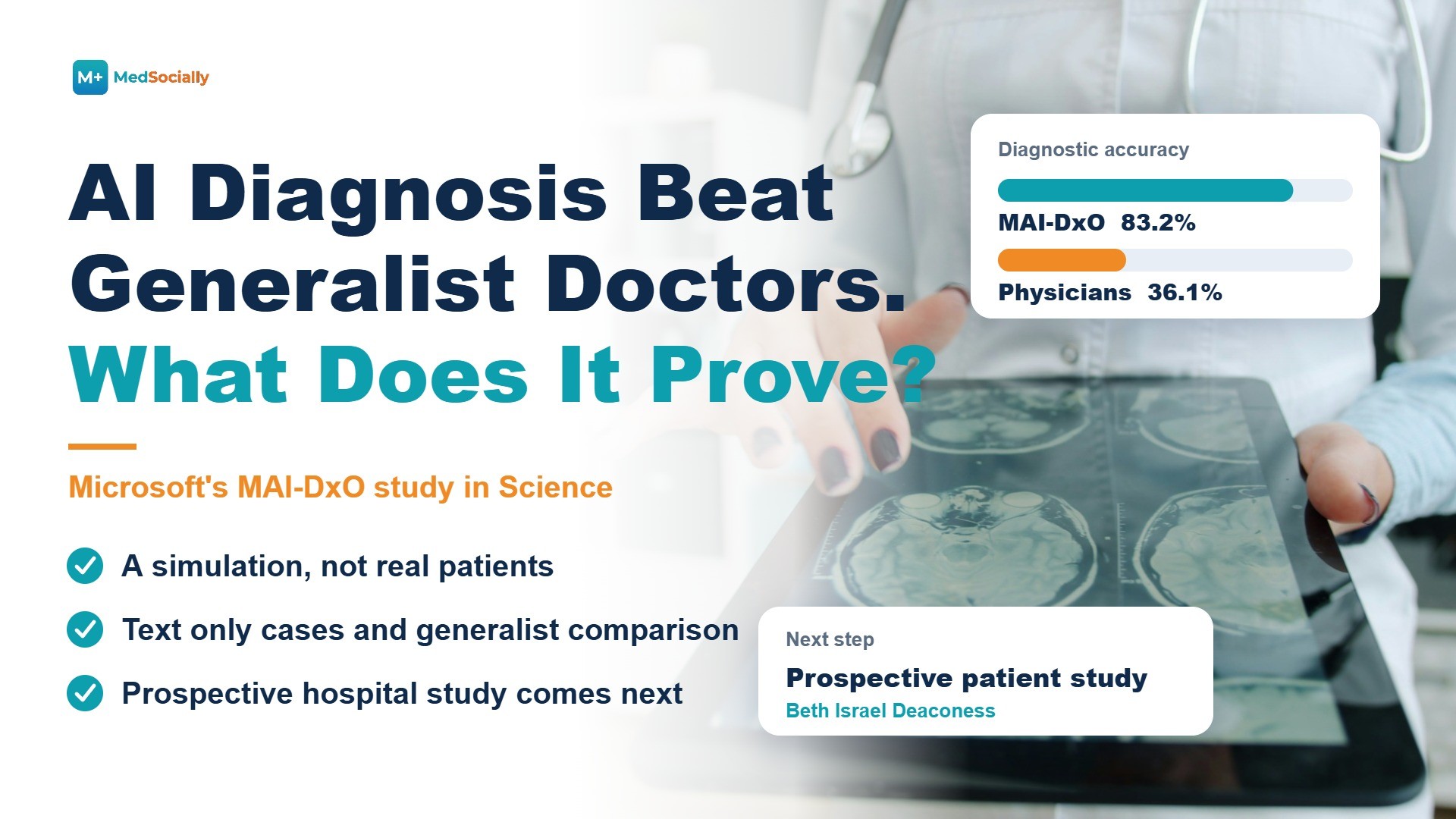
Every doctor should take note of the results of Microsoft's diagnostic AI. In a study published in Science, the system outperformed generalist physicians on difficult diagnostic ca...
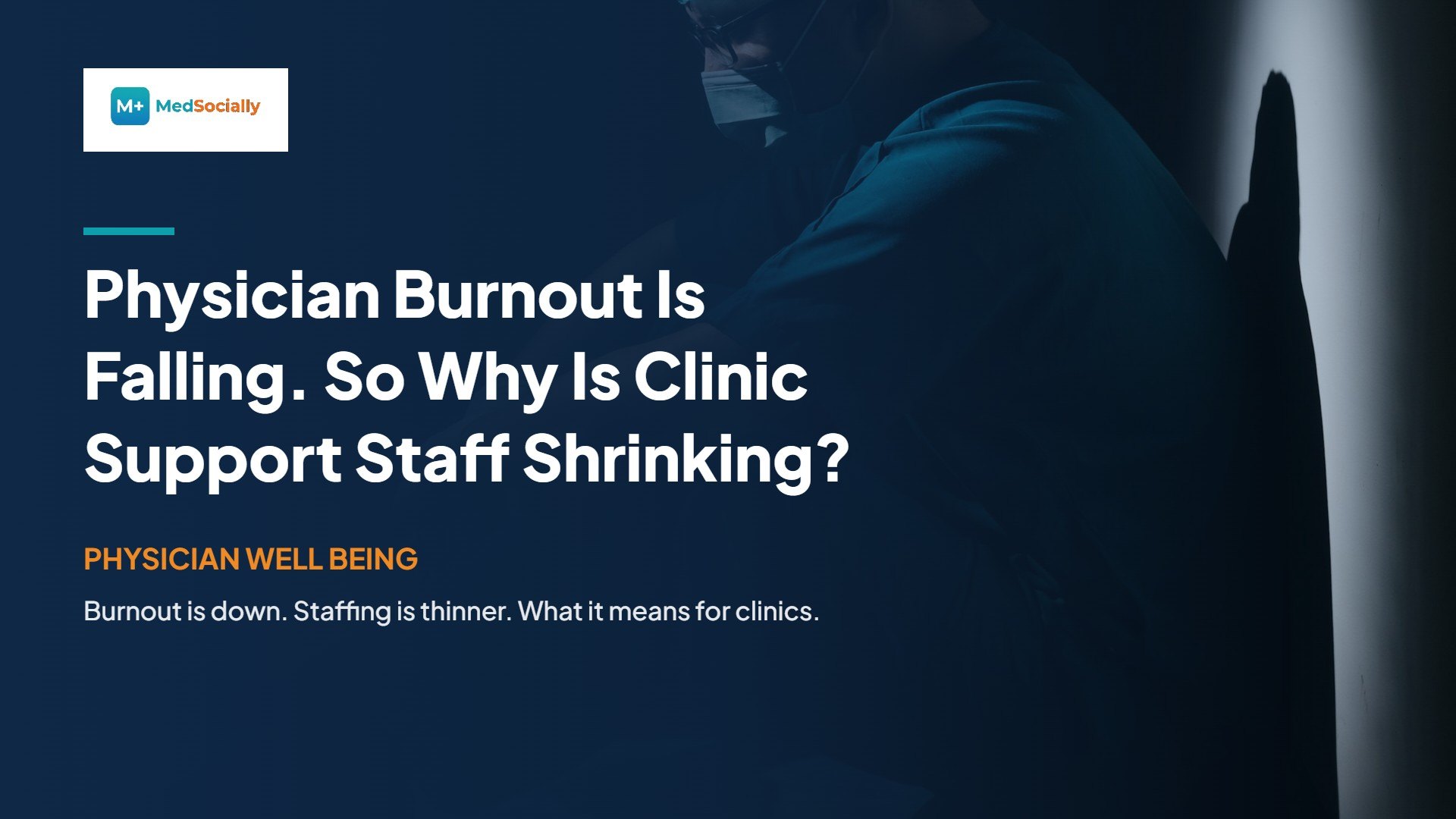
Physician burnout seems to be on the decline. It is good news for a profession that has felt exhausted and stressed for years. But another trend deserves attention. Clinics are ope...
Ambient AI nursing documentation is moving from concept to clinical use. For the last several years these tools were built around physician notes. Now they are moving into inpatien...
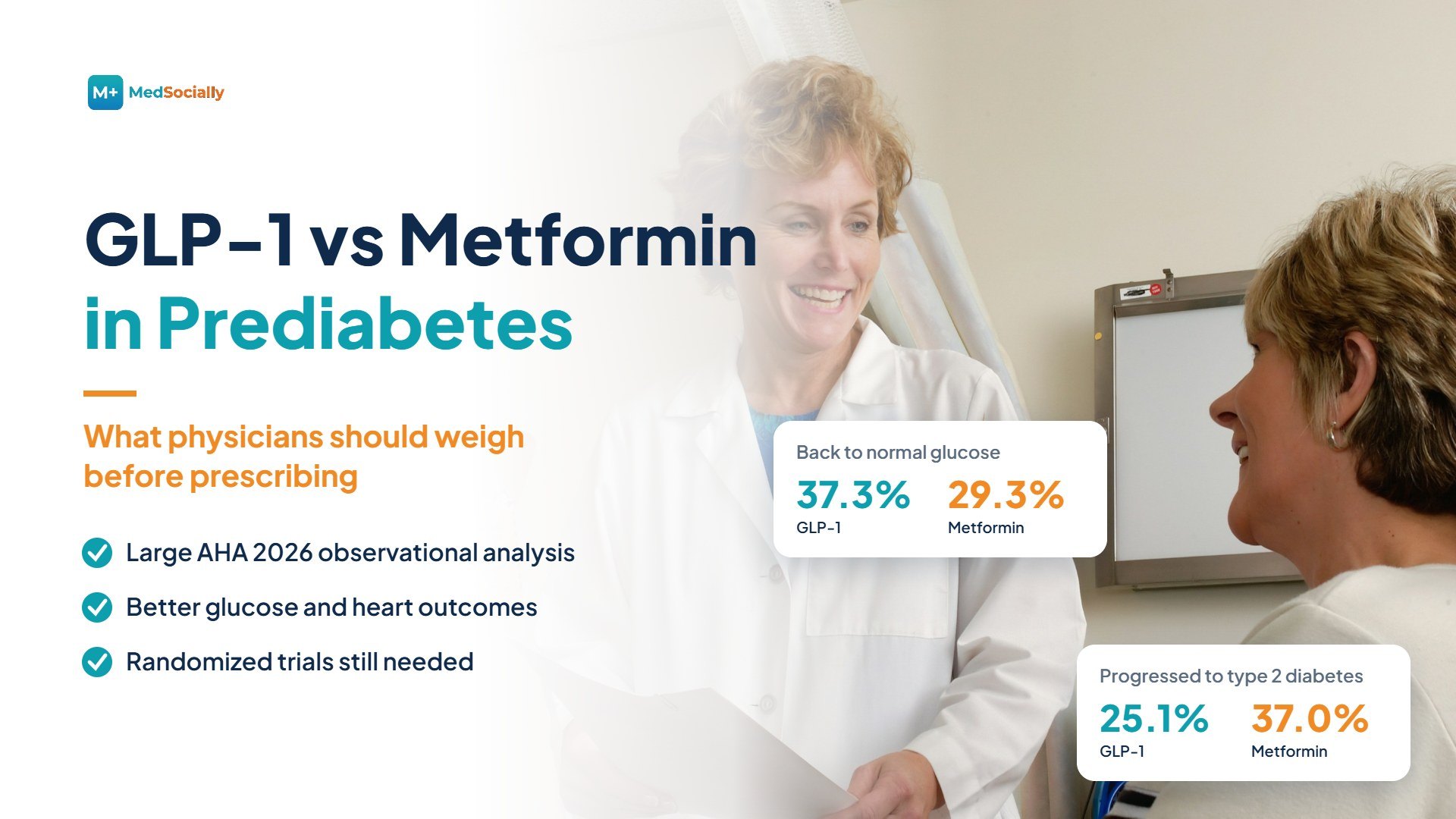
You have a patient with prediabetes in your exam room, and she asks a question you have heard more than once this year. "If these weight loss shots work so well, why am I still on ...
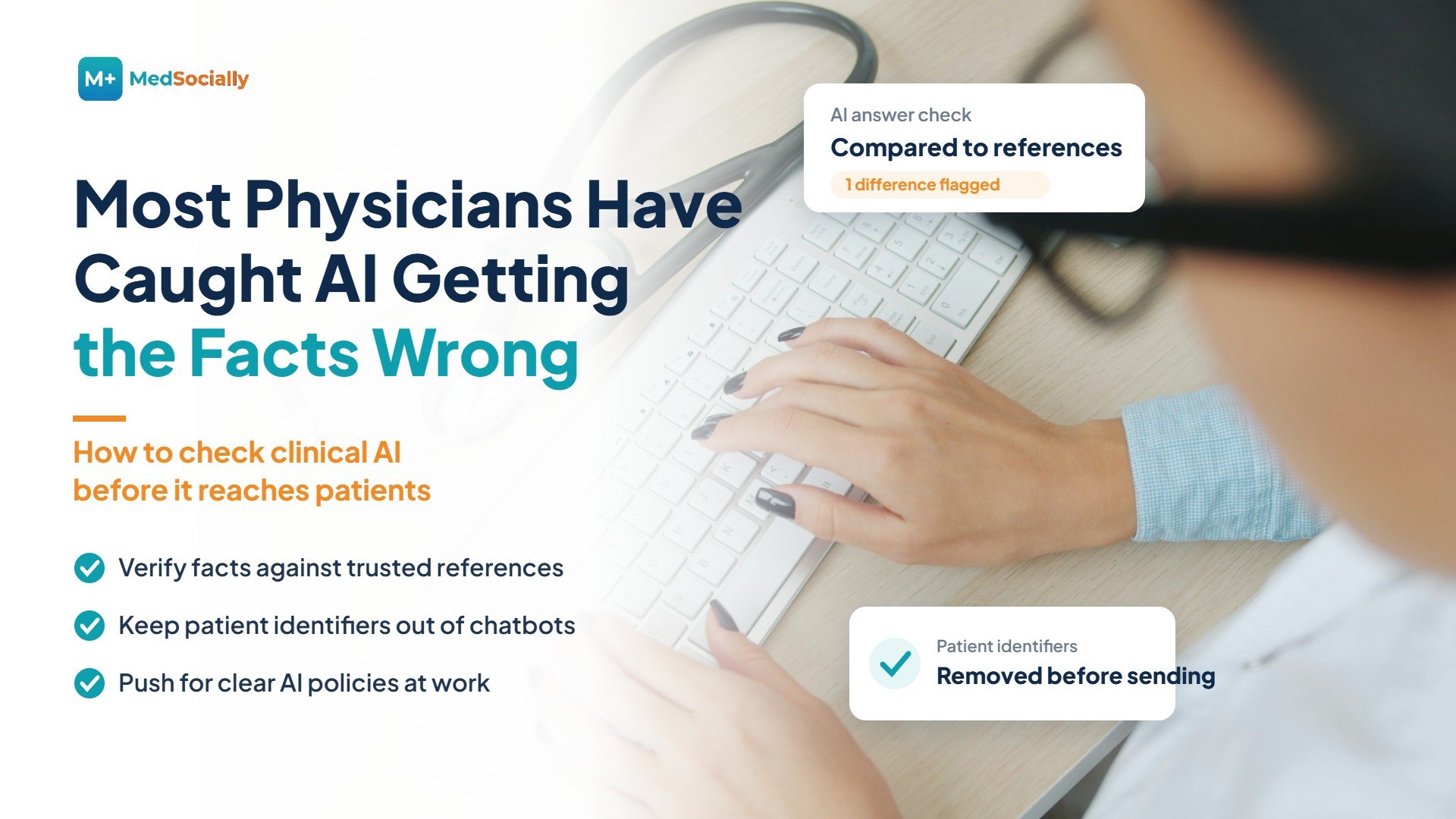
AI can write a convincing clinical explanation in seconds. Convincing does not always mean correct. As more of us bring clinical AI tools into daily practice, the question is no lo...