Artificial intelligence can write a clinical note, highlight a medication issue and suggest a diagnosis. But when it goes wrong, who is to blame? As AI for physicians becomes a bigger part of everyday practice, that question gets more important by the month.
At its 2026 Interim Meeting, which wrapped up November 9, the American Medical Association adopted policy that leaves no doubt about the difference between artificial intelligence and medical professionals. AI cannot be licensed, cannot hold a physician's professional title and cannot be certified to practice medicine. The policy also speaks to a concern many of us share. We don't want to be blamed for technology we didn't create or select.
The AMA's stance is simple. AI can aid medical care, but it cannot be a licensed doctor. Clinical AI tools should be used within physician-led teams and at the direction of the treating physician.
A doctor brings clinical training, professional accountability and a knowledge of the patient that goes well beyond what has been typed into a software system.
Think of a patient with multiple chronic conditions whose symptoms are atypical. The AI tool may suggest a sensible next step based on the information it has. The treating physician might find something in the history or exam that makes that recommendation wrong for this patient. The doctor should keep the authority to make that call.
Few of us are asking whether AI should have a medical license. We are asking more practical questions. Is an AI generated clinical note reliable? Do I need to follow a decision support recommendation? What if an automated inbox tool suggests the wrong reply?
Picture the end of a packed clinic session with your documentation drafted by an AI scribe. The note looks well written. But it states that the patient denied a symptom you never discussed. You spot the mistake and correct it before you sign. That is physician oversight in practice.
The same is true of decision support tools and automated patient messages. A recommendation that sounds confident is not automatically accurate. Physicians should be able to challenge, tweak or reject AI output without facing repercussions for exercising sound clinical judgment.
The part of the AMA's stance with the most impact concerns clinical AI liability. Doctors have long feared that AI could bring new risks while leaving physicians liable for failures beyond their control.
The AMA wants a different approach. Its framework, released October 29, 2026, ties accountability to each party's authority and ability to prevent harm. A physician can review a recommendation and decide whether it is clinically appropriate. A doctor usually cannot examine the underlying technology, fix a broken algorithm or check a vendor's safety claims.
So the AMA says that when harm is caused by a defective clinical AI product, responsibility should fall on the vendors, manufacturers or distributors behind the defect. It also supports federal and state protections for physicians who use AI appropriately and exercise good clinical judgment. The aim is not to take away physician accountability. It is to keep doctors from becoming the default party blamed for every failure of clinical technology.
Supervising a technology is not the same as taking the blame for it. Physician oversight of AI cannot make up for a lack of safety evidence or poor system design.
Physicians should have access to transparent and auditable evidence of the safety and efficacy of any AI product used for diagnosis, prescribing or care management. The vendor should be able to describe its intended use, known limitations and performance.
Imagine a decision support tool that recommends a treatment that does not fit your assessment. You read it, think about the patient's situation and choose another approach. Under the AMA's stance, doctors should not be held liable for declining to follow an AI recommendation. Clinical judgment has to stay independent. Nobody should feel forced to accept an AI suggestion because hospital policy, workflow design or fear of liability makes it hard to disagree. Good oversight means being able to say no.
The policy also raises questions of organizational responsibility. What if your hospital, health system or insurer requires you to use a specific AI product? The AMA states that the organizations that mandate these products and the vendors that supply them should bear responsibility when their use causes harm. It also backs legislation requiring AI companies to carry adequate liability insurance, disclose product limitations and performance data, and avoid contracts that pass responsibility for product failures to physicians or health systems.
When evaluating AI in the medical field, a few practical questions are worth asking:
What evidence supports this tool's safety and performance?
What are its known limitations and intended clinical uses?
Can physicians override recommendations without pressure?
Who is responsible when the technology fails?
How are errors reported, reviewed and corrected?
Bring these questions to medical leadership, vendors and clinical governance teams. Find out whether your organization has a process for reviewing AI related safety concerns.
As AI for physicians becomes commonplace, documentation deserves a new focus. If an AI recommendation shapes a major decision about a patient's care, write down your clinical reasoning. When you reject a recommendation because it conflicts with your assessment, the record should include the relevant findings and your reasons.
This is not about adding documentation for every automated suggestion. It is about a clear record of important clinical decisions. Check AI scribe notes for accuracy before signing. Make sure decisions made with decision support rest on your own assessment. Take a careful look at automated inbox replies about clinical concerns. Documentation should reflect thoughtful care, not blind acceptance of technology.
Keep in mind what the policy does not do. It is an advocacy position. It does not change existing federal or state law and does not create new liability protections on its own. Keep following current requirements and your organization's policies while you push for clearer accountability.
The AMA's latest policy is not a move against artificial intelligence. It is an argument for responsible adoption. AI can ease administrative work and aid clinical decisions, but the benefits depend on reliable technology, transparent evidence and professional independence.
The promise of AI for physicians should not come with an expectation that doctors take full responsibility for tools beyond their control. Physicians need to remain responsible for their clinical decisions. Vendors and organizations need to remain responsible for the technology and decisions they manage. That is a more solid base for bringing AI into patient care.
How is your organization handling AI oversight and liability? Do doctors feel free to challenge AI recommendations, or is there pressure to comply? Share your experience with colleagues in the MedSocially community.
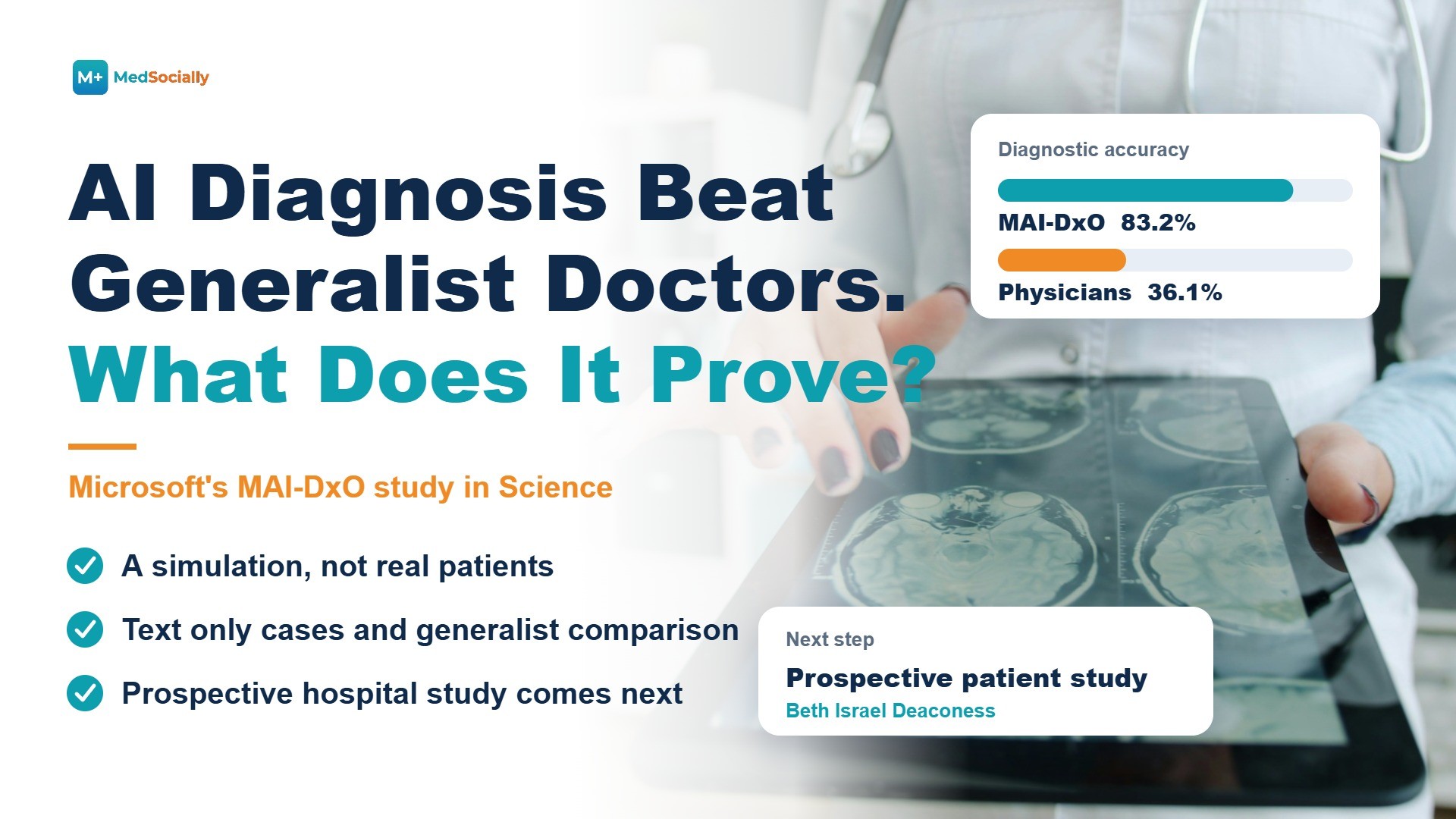
Every doctor should take note of the results of Microsoft's diagnostic AI. In a study published in Science, the system outperformed generalist physicians on difficult diagnostic ca...
Physician burnout seems to be on the decline. It is good news for a profession that has felt exhausted and stressed for years. But another trend deserves attention. Clinics are ope...
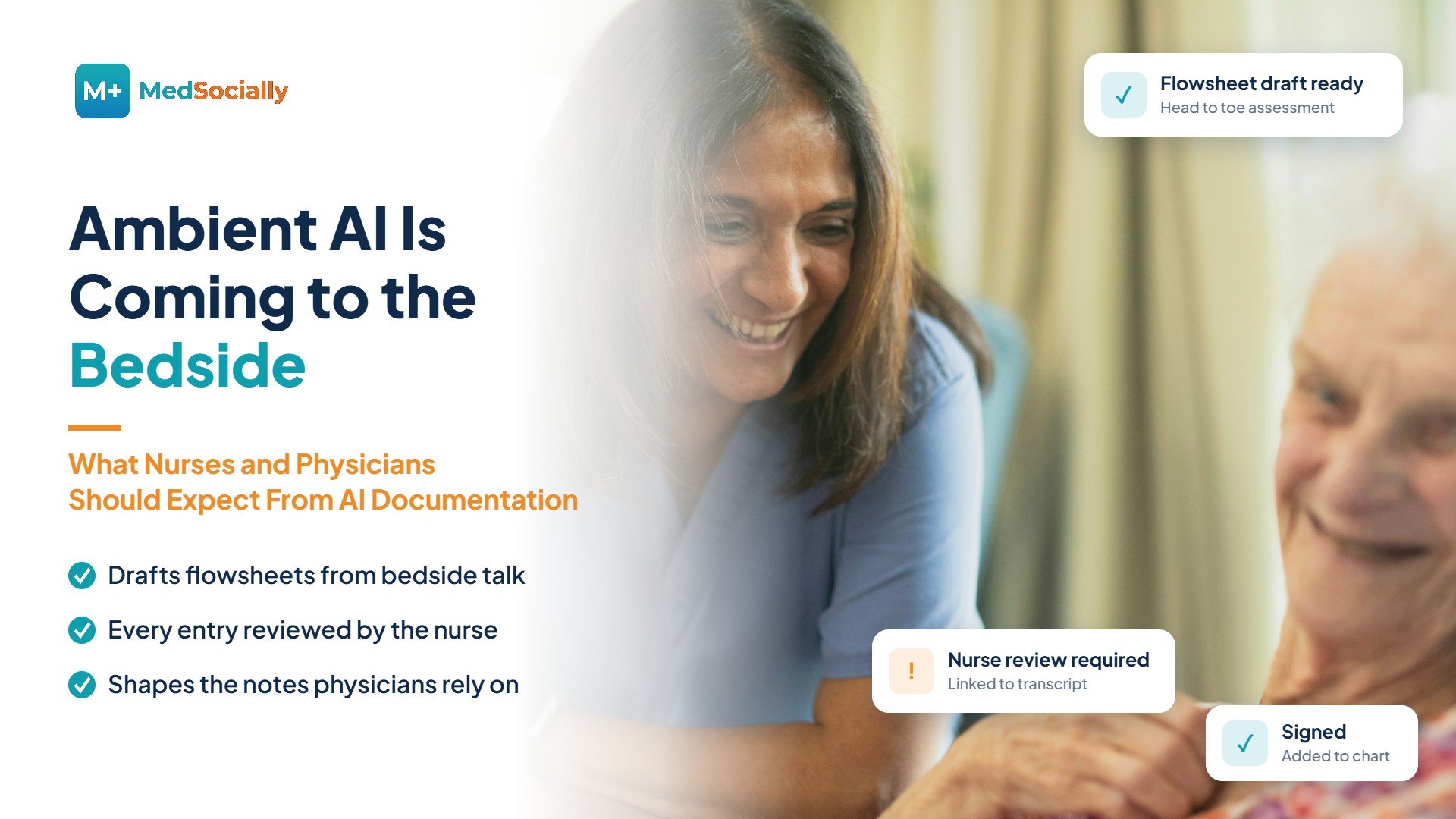
Ambient AI nursing documentation is moving from concept to clinical use. For the last several years these tools were built around physician notes. Now they are moving into inpatien...
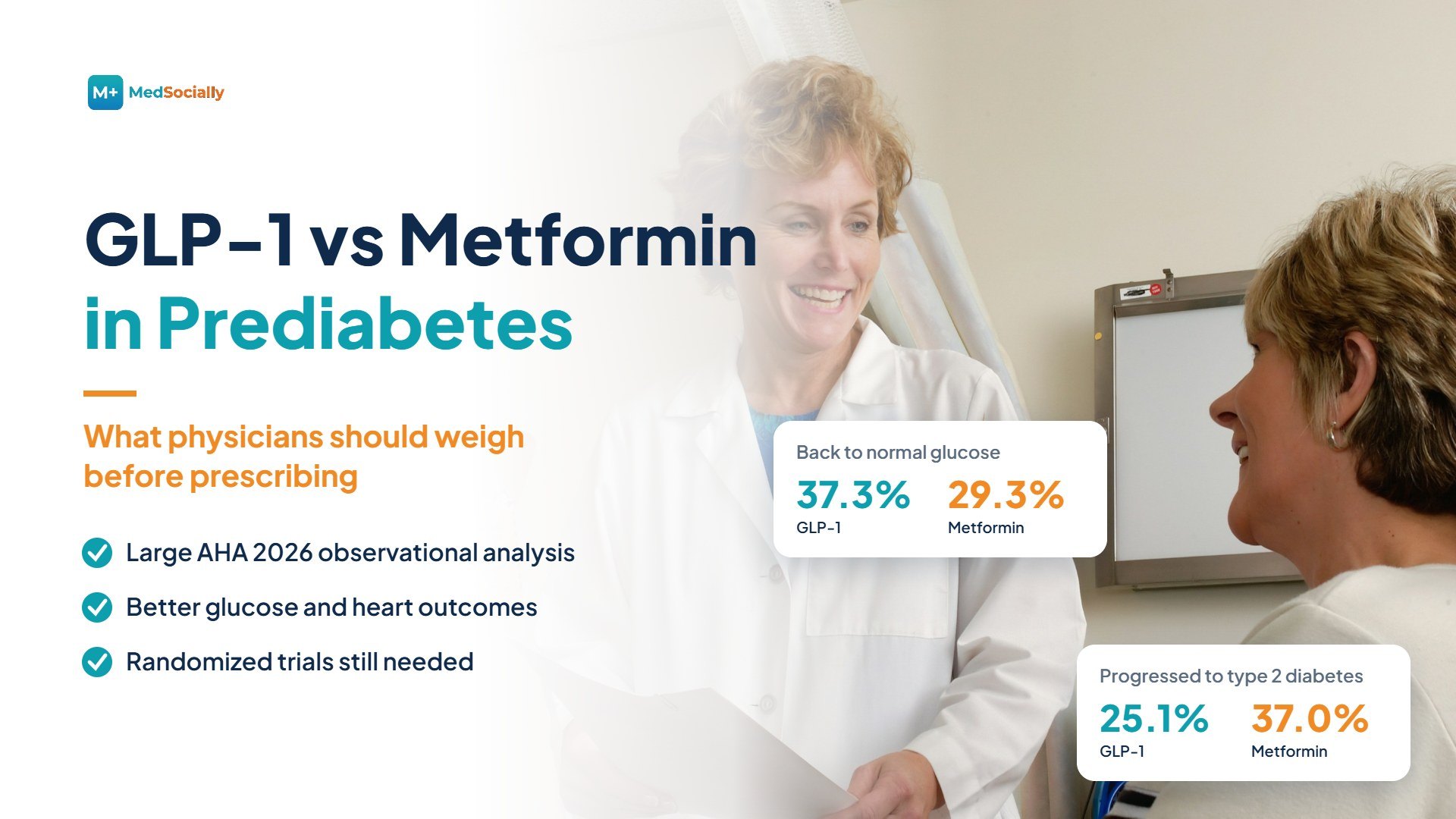
You have a patient with prediabetes in your exam room, and she asks a question you have heard more than once this year. "If these weight loss shots work so well, why am I still on ...
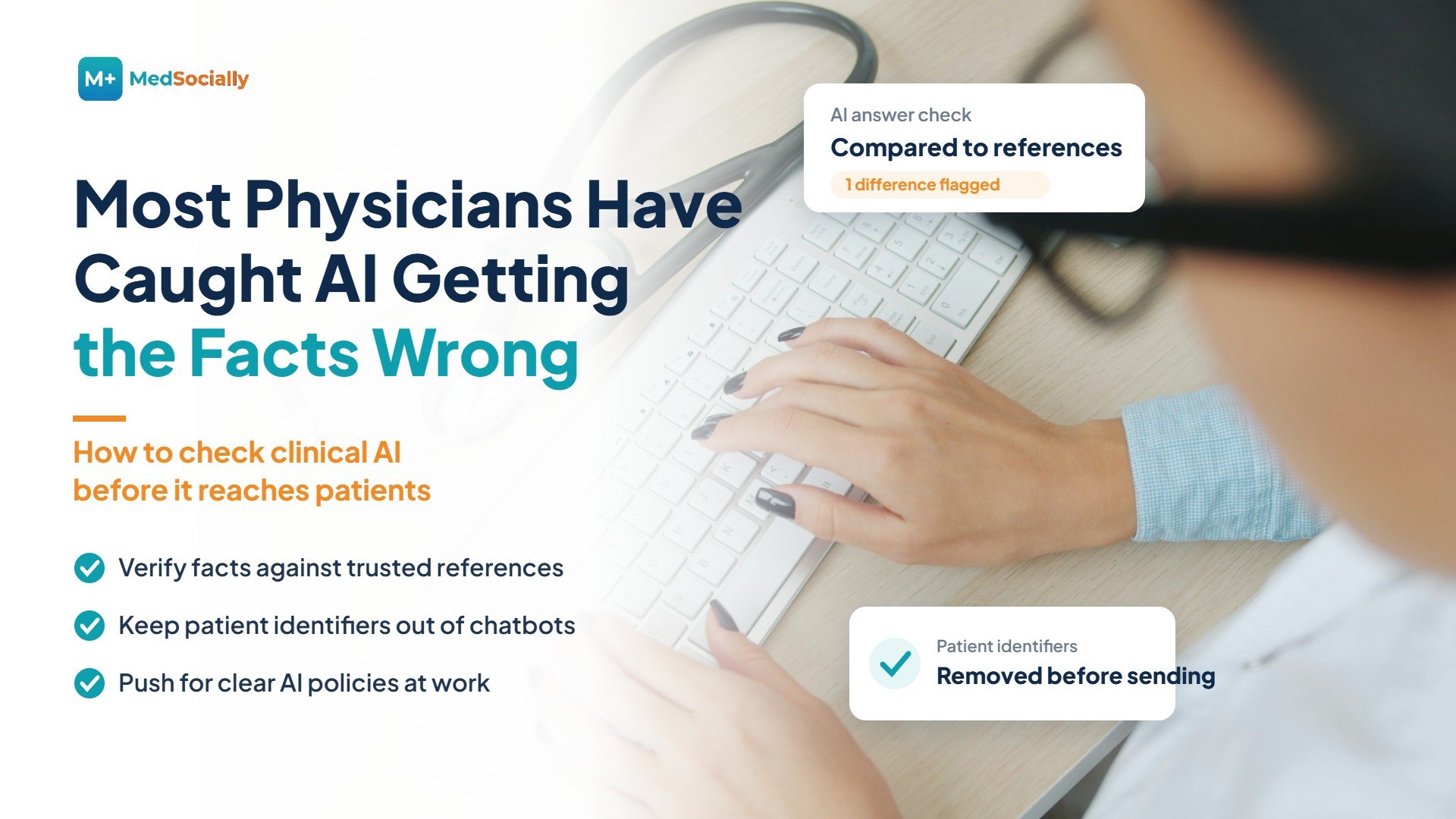
AI can write a convincing clinical explanation in seconds. Convincing does not always mean correct. As more of us bring clinical AI tools into daily practice, the question is no lo...