A few years ago most of us were still just curious about AI. Now it sits open in a browser tab right next to the EHR. Artificial intelligence for doctors went from experiment to habit faster than almost any tool I have seen in practice. A new Doximity survey of 3,379 U.S. physicians across 20 specialties puts hard numbers on what many of us already sense. It also shows something else. Physicians want a real say in how these tools get used.
The headline is simple. 85% of physicians now use AI for work at least once a week. Last year it was 51%. More than half of us use it every day, up from 37%.
The use cases are not flashy. They are the ordinary work of medicine. Among physicians who use AI, 70% use it to search the literature. 63% use it for clinical decision support, a big jump from 37% a year ago. Nearly half say it has trimmed the paperwork that used to follow them home after clinic.
Picture a Tuesday afternoon. A patient on a new biologic asks about a rare side effect she read about online. Ten years ago that meant promising to call her back after an evening of digging. Today you can pull a focused literature summary in a few minutes, check the key sources and answer her before she leaves the room. That is how AI is helping doctors in real terms. It takes time off the tasks that never needed a medical degree and speeds up the ones that do.
There is a learning effect as well. 81% of physicians say AI has taught them something clinically new. That fits what I hear from colleagues. A quick question to an AI tool often turns up a paper or guideline they would have missed.
Now the part that should keep us honest. Three in four physicians say they ran into a factual error in AI output over the past year. That is not a rare glitch. It is a normal Tuesday.
AI for physicians works best as a fast first draft. It does not replace judgment. A confident answer with the wrong dose or a made up reference can slip past a tired clinician at the end of a long shift. Every output deserves the same skeptical read we would give a note from a brand new intern.
Patients feel this too. 27% of physicians say AI has made patients more confident in wrong conclusions. Most of us have met that patient. He walks in with a printed chatbot answer and his diagnosis already settled. The visit turns into less history and exam and more gentle untangling of what the tool told him. Those conversations take patience. They also take a physician who knows the medicine and the limits of the software.
61% of physicians worry about what AI will do to skill development in the trainees they supervise. I share that worry.
Clinical reasoning comes from repetition. You learn to build a differential by building hundreds of them, many of them badly at first. If a resident reaches for AI before thinking through the case, that muscle may never fully form.
Take a second year resident presenting a patient with chest pain and shortness of breath. Her differential is polished and complete. Then the attending asks why pulmonary embolism sits above pneumonia, and she hesitates. The list came from a tool, not from her own thinking. Nothing went wrong that day. Still, it tells us teaching programs need clear expectations about when trainees use AI and when they think first.
One gap in the survey stands out. 81% of physicians say AI use is permitted or supported where they work. Only 28% report clear policies and approvals.
So most of us are allowed to use AI, yet few of us have been told how. Which tools are approved? What patient information can go into them? Who reviews the output? When should a physician document that AI shaped a decision? In many practices nobody has answered these questions about artificial intelligence for doctors yet. That leaves each clinician to make it up on the fly.
This is where AI in the medical field becomes risky. The danger sits less in the technology and more in adoption that outruns any shared rules.
When the survey asked who should set the rules for AI in medicine, the answer was clear. 82% said physicians. Medical societies came next at 64%. Federal agencies, state governments and AI companies trailed far behind.
That instinct makes sense. We see where a tool helps and where it misleads. We carry the responsibility for the patient in front of us. Organized medicine is heading the same way. In November the AMA adopted policy saying AI can augment physicians but cannot be licensed as a doctor and should work within physician-led teams.
Wanting to write the rules also means showing up to write them. Here is where to start:
Join or start an AI governance group at your hospital or practice.
Push for a short list of approved tools with clear guidance on patient data.
Build AI expectations into resident and student teaching.
Report inaccurate outputs so the people choosing tools hear about them.
Artificial intelligence for doctors is no longer a future topic. It is part of how most of us practice every week. The benefits are real. So are the errors, the risks to trainees and the confusion patients carry into the exam room. The physicians who use these tools the most are also the clearest about one thing. Medicine needs physicians in charge of how AI is used.
How are you using AI in your practice right now? Has your organization set clear rules, or are you still working it out on your own? Share your experience with colleagues in the MedSocially community. The best guidance on AI will come from physicians learning from each other.
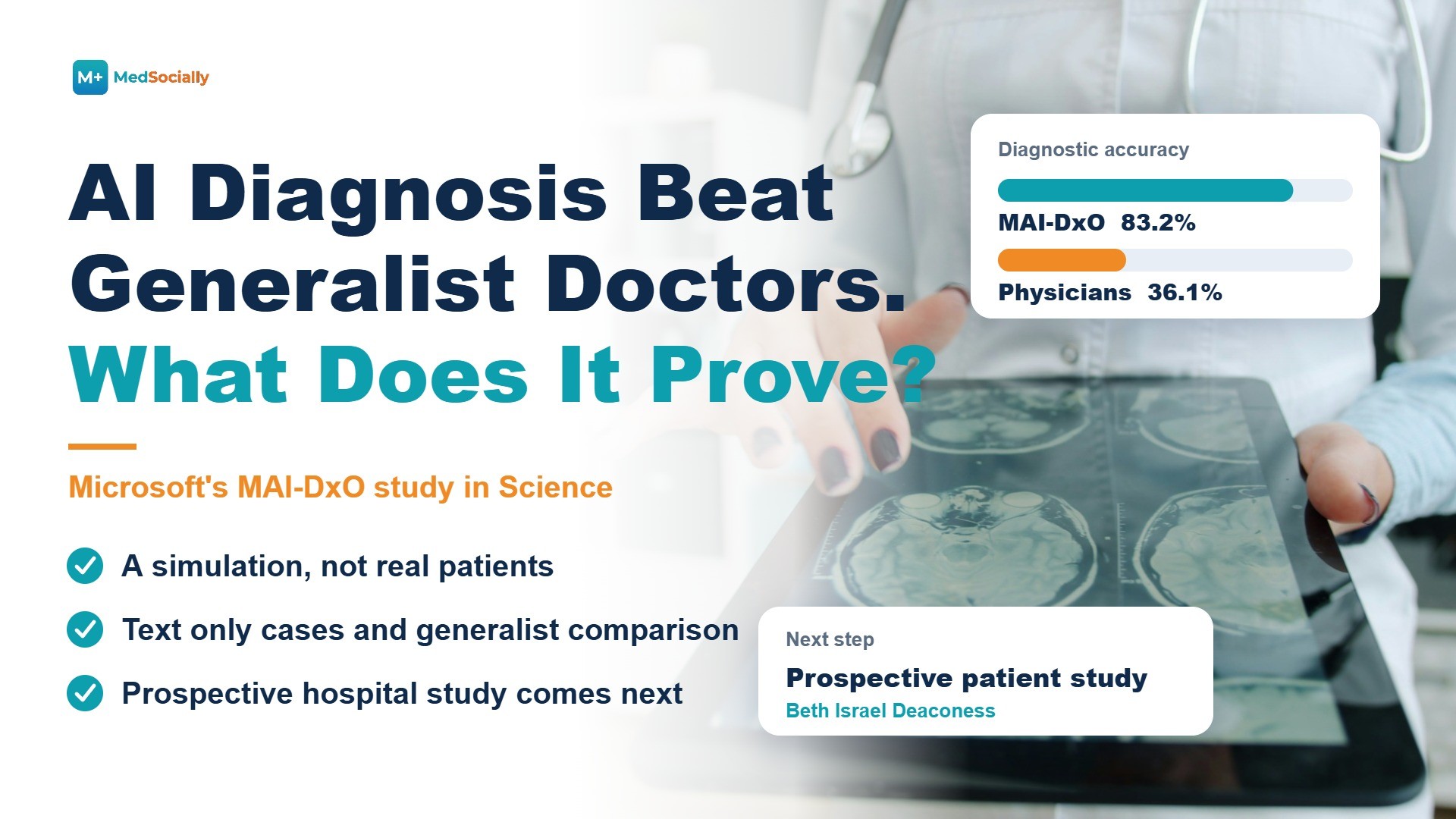
Every doctor should take note of the results of Microsoft's diagnostic AI. In a study published in Science, the system outperformed generalist physicians on difficult diagnostic ca...
Physician burnout seems to be on the decline. It is good news for a profession that has felt exhausted and stressed for years. But another trend deserves attention. Clinics are ope...
Ambient AI nursing documentation is moving from concept to clinical use. For the last several years these tools were built around physician notes. Now they are moving into inpatien...
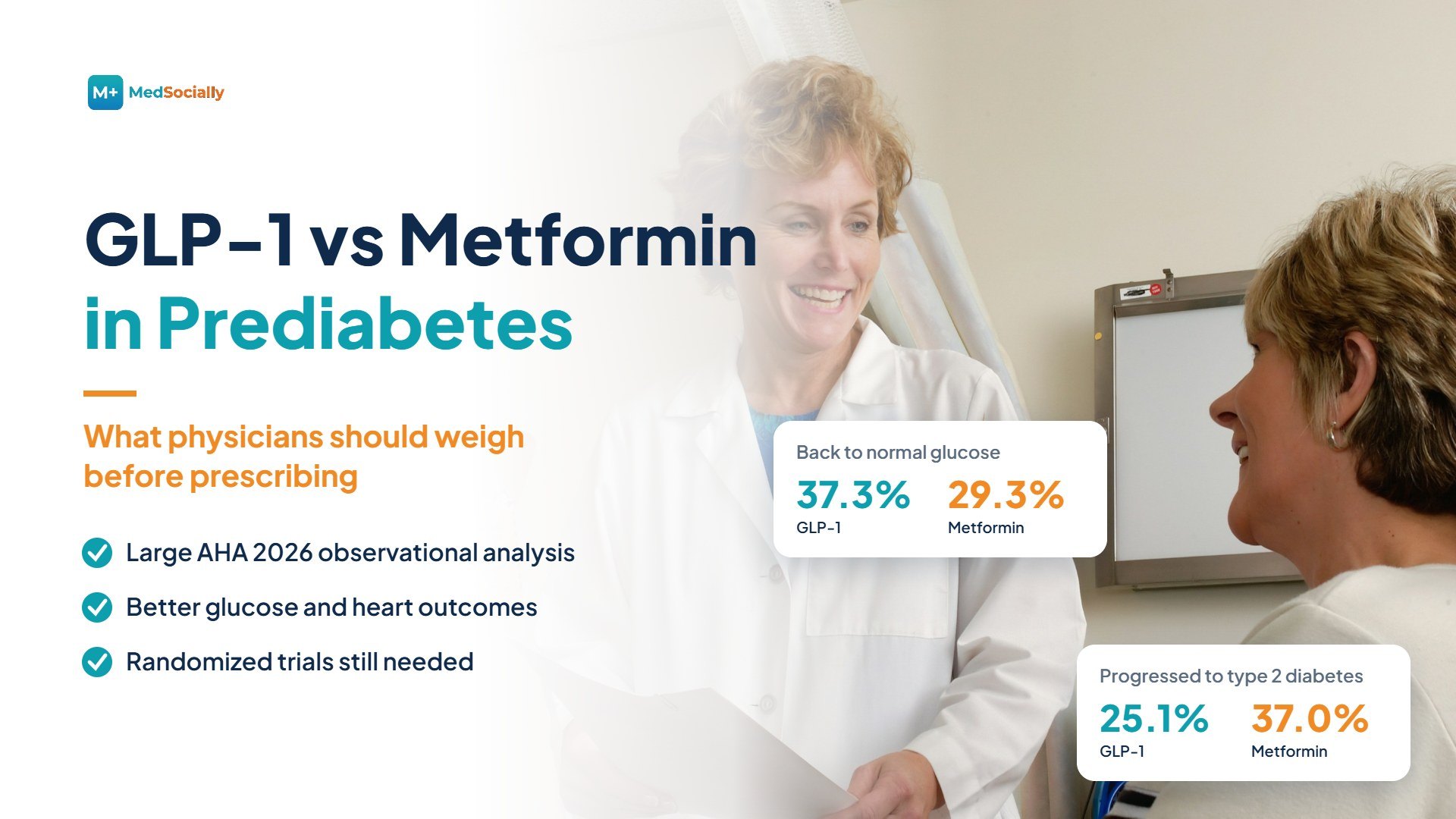
You have a patient with prediabetes in your exam room, and she asks a question you have heard more than once this year. "If these weight loss shots work so well, why am I still on ...
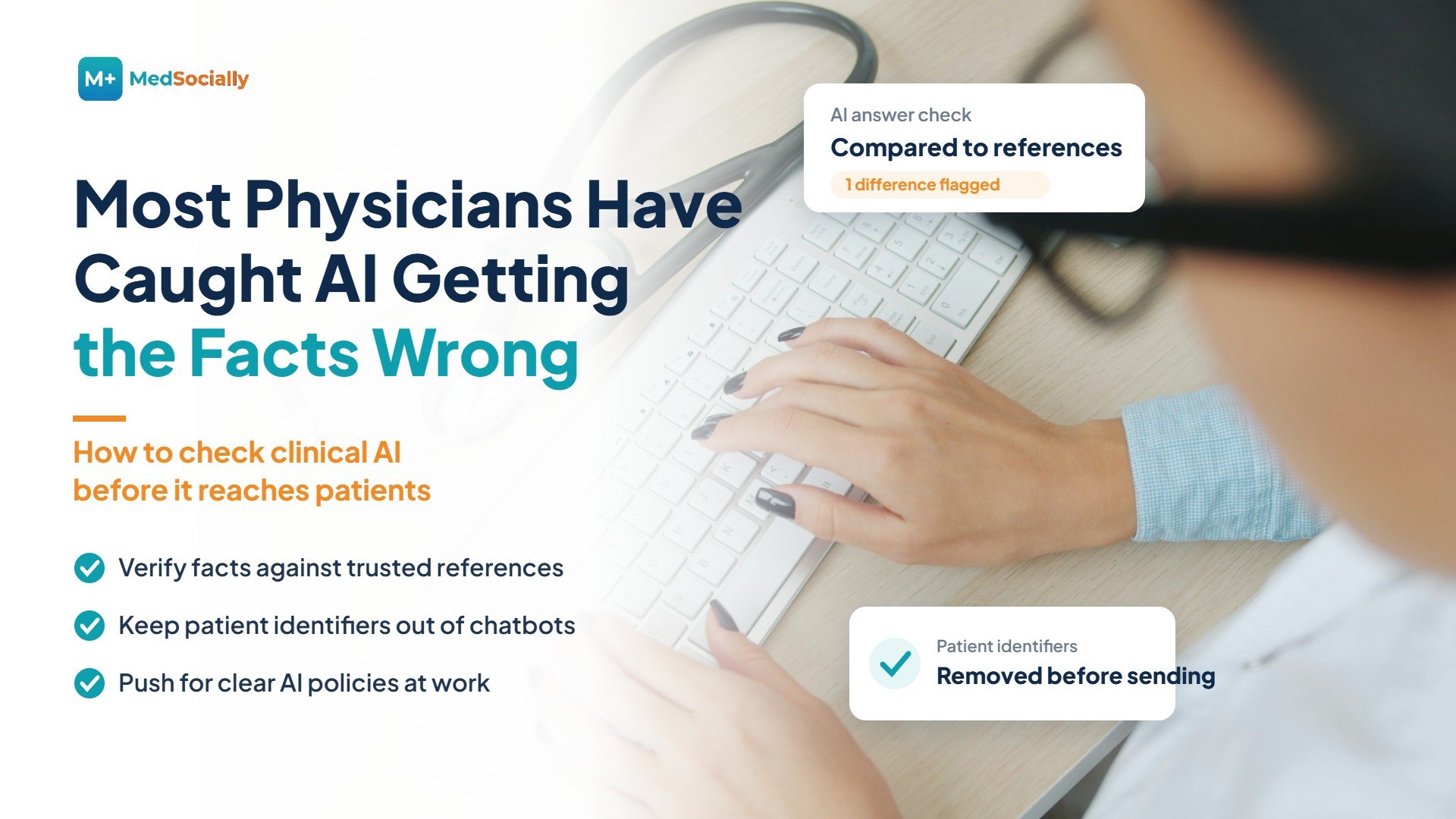
AI can write a convincing clinical explanation in seconds. Convincing does not always mean correct. As more of us bring clinical AI tools into daily practice, the question is no lo...